
The world’s private banks have never managed more money, but the gap between those investing in technology, alternatives and talent, and those that are not, is widening. Euromoney’s inaugural Asia MarketMap assesses the region’s leading institutions across two axes of competitive performance – execution and platform – to reveal who is best placed to capture wallet share as clients consolidate relationships, alternatives go mainstream and AI reshapes the front office.
The analysts


Private banking in Asia is at an inflection point. Wealth migration from mainland China has accelerated, positioning Singapore and Hong Kong as beneficiaries of cross-border asset flows from one of the world’s largest pools of U/HNW capital.
Wealth creation in technology – notably AI and electric vehicles – is generating fresh demand for private banking services from clients whose requirements differ fundamentally from the entrepreneurs who built Asia’s first generation of private wealth.
Structural tailwinds – including an increasingly sophisticated family office ecosystem and a resurgent Chinese IPO market – are also contributing to a wealth landscape that becomes more competitive and robust with each passing year. Against this backdrop, the gap between the leaders and the rest when it comes to private banking providers has rarely been wider.
Several themes shaped Asian private banking during the 12 months to 2Q25, the period considered for this Euromoney MarketMap. As interest-rate cuts became entrenched, banks that invested in discretionary portfolio management (DPM), alternatives and comprehensive chief investment office (CIO) functions were best placed to redeploy idle client cash into fee-generating products.
Meanwhile, Asia’s UHNW segment has never been more intensely contested. Talent acquisition – particularly following hiring market ructions in the wake of UBS’s rescue of Credit Suisse – remains critical to obtaining greater wallet share. Generative AI moved from pilot to deployment, with the most advanced institutions generating measurable productivity and revenue gains.
The private banks featured in this MarketMap stand out when it comes to best practices around such trends, and are the best equipped to define the next chapter of Asian wealth management.
More reports


The MarketMap and methodology
Methodology
The Euromoney MarketMap is a proprietary analytical framework designed to assess and position the world’s leading private banks against two thematic axes of competitive performance. The MarketMap combines four evidence sources to produce a composite positioning for each private bank. All are drawn from submissions made by institutions in the Euromoney Private Banking Awards 2026 research cycle, supplemented by publicly disclosed financial data.
- Quantitative data: Encompassing AUM, NNA, revenue, cost-to-income ratios, return on assets and relationship manager productivity metrics;
- Qualitative data: Detailing strategic initiatives, client capabilities, product innovation and investment in people and technology;
- Structured interviews: Conducted by the Euromoney research team with senior executives including chief executive officers, heads of private banking, chief investment officers and heads of key product and regional business lines;
- Proprietary Euromoney analysis: Scores, evidence and peer comparisons compiled by Euromoney analysts during the Private Banking Awards 2026 research cycle.
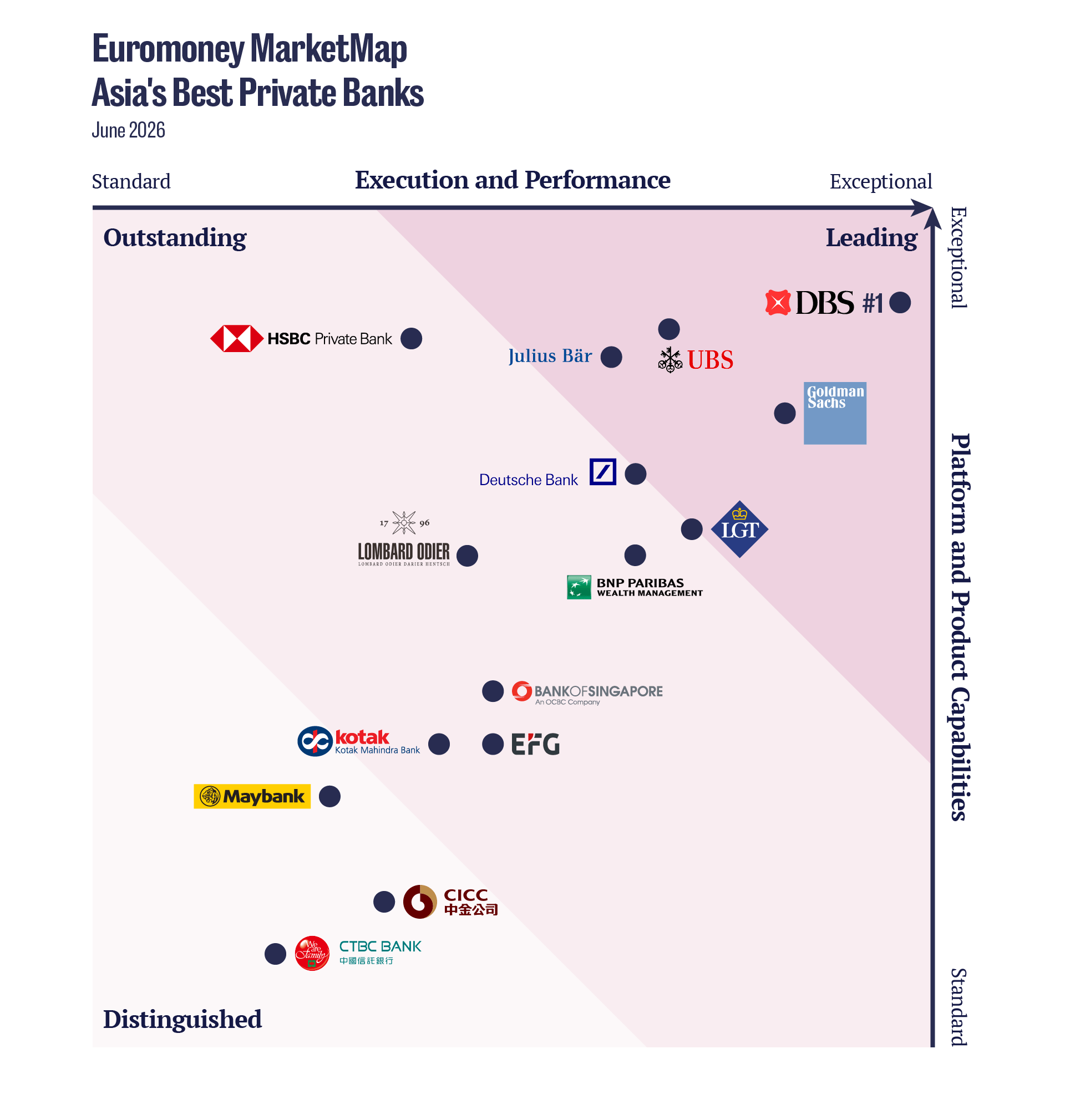
Each institution is scored against criteria organised against two axes:
- Execution and performance (x-axis): Evaluates execution of stated market strategy, AUM growth, NNA generation and wallet-share gains, revenue and margin performance, relationship manager productivity and recruitment, and M&A integration track record;
- Platform and product capabilities (y-axis): Assesses depth and innovation of private banks’ product shelves – including trading and execution, funds, alternatives and discretionary management – digital platforms, commitment to sustainability and environmental, social and governance (ESG) integration, and client segmentation.
Based on composite scores across both axes, institutions are placed into one of three tiers. The Leading tier comprises banks that are exceptional on both axes – delivering superior growth, product depth and execution simultaneously. The Outstanding tier recognises institutions that excel across most criteria with notable strengths, but may have some differentiation gaps. The Distinguished tier identifies credible performers with strong specialisms or compelling growth stories in specific segments or markets.
Strategy and execution excellence
The private banks featured in this MarketMap do not appear merely due to their growth in AUM in Asia in absolute terms – but also due to the quality of that growth. Those included in this report have demonstrated their capabilities in terms of translating raw AUM into durable NNA, diversified fee income and disciplined cost management.
For many private banks in Asia, the focus has been shifting from net interest income- and transaction-based revenue towards fee-based and investment-led income. Doing so successfully has required a multi-year platform investment and long-term management conviction. Being able to successfully shift revenue from more cyclical sources to longer-term, recurring ones is what separates those private banks in the Leading tier, and those in the Outstanding and Distinguished tiers.
DBS Private Bank earns top position in our Asia MarketMap and is the beacon of superior strategy and execution. The Singapore-based player’s AUM grew 16.5% to SGD339 billion ($261 billion) in the 12 months to June 2025, with net new money of SGD23.3 billion – DBS’s third consecutive year above SGD20 billion. Total wealth management income reached SGD5.43 billion, up 12%, while return on equity rose to 72% from 58%.
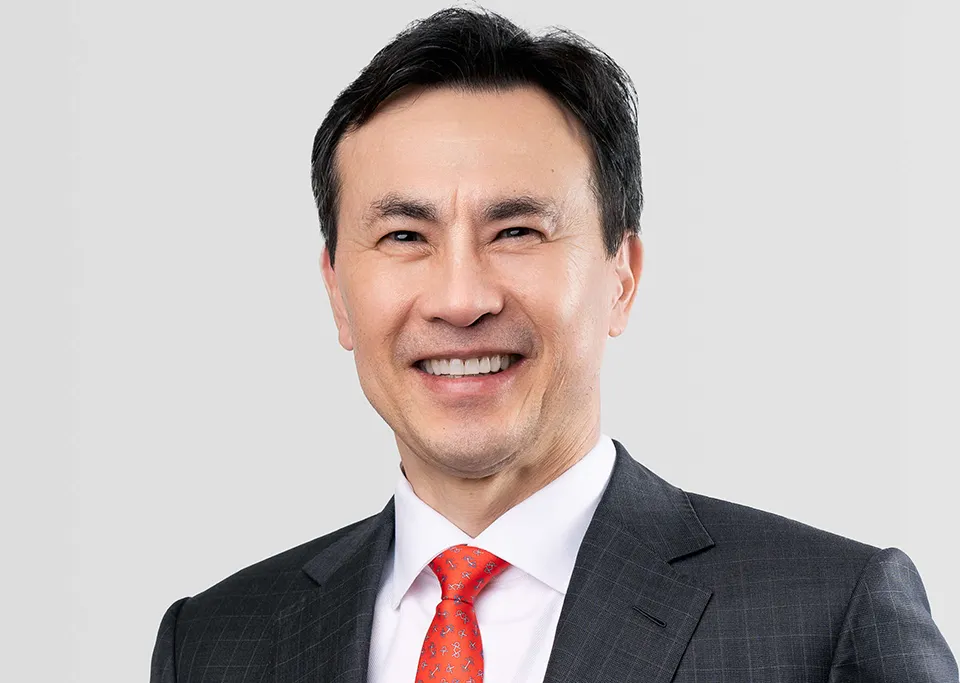
We doubled our AUM in five years and achieved record-breaking income, consistently outpacing global competitors in growth and execution
Joseph Poon, DBS
The wealth continuum model – graduating clients from wealth management platform DBS Treasures to private bank to single-family office – creates an organic pipeline for ‘new’ clients. Expansion across Asia from its Singapore HQ signals execution discipline beyond DBS’s home base. As private bank group head Joseph Poon recently told Euromoney: “We doubled our AUM in five years and achieved record-breaking income, consistently outpacing global competitors in growth and execution.”
Execution matters as much in organic growth as it does when it comes to M&A. UBS Global Wealth Management’s post-Credit Suisse integration playbook has, by most measures, succeeded. Apac invested assets rose 19% to a record $746 billion in 2Q25, with 1H25 NNA of $18.6 billion from the region.
Revenues from OneUBS, the unit that connects top private banking clients with investment banking and institutional trading capabilities, have continued to grow strongly. The bank’s regional cost-to-income ratio has improved by 7.8 percentage points to 60.68%, showing that the bank has remained disciplined on costs amid strong commercial performance and an intensive integration process.
For Goldman Sachs Private Wealth Management (PWM), institutional discipline is key to its UHNW franchise in Asia. Goldman’s strategy is deliberately narrow: it targets the $1 billion-plus wealth segment, where its alternatives platform, co-investment access and bespoke structuring capabilities are not only attractive but essential. The bank has the highest relationship manager (RM) productivity in terms of revenue-per-advisor generated, as well as the longest average tenure of RMs. The US private bank’s AUM in Asia rose by 17% to $75 billion as of 2Q25.
Also in the Leading tier, Julius Baer’s placement is on the strength of consistent long-term execution across Asia’s most critical wealth corridors. Marking its 20th year in Asia in 2026, the bank has grown into the largest pure-play private bank in the region, with the continent representing more than 25% of global AUM and workforce.
Client assets grew 15% year-on-year as of 2Q25 to $151 billion, with average AUM per RM, and transactional revenue growth all scoring highly. Year-on-year revenue growth for its Asia-Switzerland desk has also been strong, underlining the Zurich-based bank’s prowess in tapping into Asian U/HNWIs’ global wealth streams.

Nobody else can go to a client and say ‘Let’s talk about your company and your private affairs as one continuum.’ We just have one conversation
Claudio de Sanctis, Deutsche Bank
Leveraging its footprint across Hong Kong and Singapore, Outstanding HSBC Private Banking knows how to make the most of its on-the-ground presence in these jurisdictions. Combined with genuine access to mainland Chinese corporate and institutional relationships, the bank demonstrates a client proximity that purely international players struggle to replicate from offshore booking centres. Its recognition as Asia’s best for succession planning at Euromoney’s Private Banking Awards 2026 reflects this depth of multi-generational client relationships built over decades.
Other banks have delivered on the strategy and execution front, with exceptional results. Bank of Singapore’s AUM rose 15% to $135 billion as of 2Q25, amid a surge in NNA. This has in part been driven by a sustained hiring programme that took RM headcount past 500. Of particular note has been Bank of Singapore’s deepening penetration of the crucial UHNW segment, while its intermediary business – serving family offices and external/independent asset managers – has also enjoyed a tailwind following the restructuring of this unit.
When it comes to other international players, BNP Paribas Wealth Management noted the successful execution of several single client tickets that each brought in more than $1 billion in fresh assets, all linked to its one-bank capabilities that connect the wealth unit with corporate, institutional markets and investment banking. With AUM in Asia increasing by 13% to $108 billion as of 2Q25, driven by robust growth in client assets in Singapore, the Paris-based bank has substantially grown its AUM per RM over the years, highlighting an increasing strength in the important UHNW segment.
Another European player making inroads in Asia is Deutsche Bank Private Bank, which grew its regional AUM by 12% to $77 billion in the 12 months to 2Q25, in tandem with credible revenue growth from its UHNW and family offices businesses in Asia.
Bringing its most sophisticated regional clients the entire Deutsche Bank proposition has been key. As global head of private banking Claudio de Sanctis recently told Euromoney: “Nobody else can go to a client and say ‘Let’s talk about your company and your private affairs as one continuum.’ We just have one conversation.”
Client segmentation focus
Client segmentation has become one of the most consequential strategic levers in Asian private banking. As the region’s U/HNW population becomes increasingly sophisticated and complex – spanning tech founders, family businesses undergoing generational transition, globally mobile professionals and single-family offices – the ability to tailor advisory models, product access and service delivery to distinct client archetypes is separating the leading institutions from the pack.
The most successful banks deepened their UHNW propositions while building structured engagement models for next-generation clients, recognising that today’s junior family member is tomorrow’s primary wealth holder.
DBS Private Bank’s wealth continuum structure enables it to build relationships at an early stage in a client’s wealth journey and deepen them over decades – with 40% of private banking clients having progressed up this funnel. At the top end of UHNW, the Private Assets Club executed a number of marquee late-stage technology deals in 2025, achieving eye-watering returns in some cases. Bancassurance income rose substantially in the 12 months to 2Q25, signalling penetration into insurance and legacy planning wallets alongside investment mandates.
With a laser-like focus on the UHNW segment, Goldman Sachs PWM benefits from a proven model for capturing clients at major liquidity events – tech IPOs, company disposals, generational business transitions – and building UHNW relationships that grow in tandem with clients’ evolving complexity. The biggest testaments to this model’s depth and durability are an average UHNW account size that is among the biggest in Asia and a very high fee-based AUM as a proportion of overall client assets.
One of the most coherent approaches to segmentation comes from BNP Paribas Wealth Management, which slices its Asia client base into core, key and strategic tiers, with strategic clients – or those with the biggest books and most complex needs – representing the majority of AUM. The French bank’s NextGen Experience – now in its 18th year – holds events in Bangkok and Hong Kong featuring real UHNW family case studies.
Meanwhile, HSBC Private Banking operates one of Asia’s most sophisticated data-led segmentation engines – a structural advantage derived from its position as both a retail and private bank at scale. The bank uses proprietary analytics to identify Premier banking clients in the $2 million to $10 million segment that carry the profile of true private banking candidates: multi-bank relationships; investment requirements beyond deposit holdings; and an appetite for wealth planning rather than mere transactions. While this data-driven segmentation has reduced the volume of client upgrades from Premier to Private, it has materially increased their quality and revenue contribution.
From a more domestic market perspective, Kotak Private Banking segments clients across HNWI, UHNWI and single or multi-family office categories, with further refinement by profile, age, gender, source of wealth, life stage and goals.
The bank manages wealth for 60% of India’s top 100 families as ranked by Forbes India 2024, and UHNW clients – defined as those with investable surplus above $25 million – are served by a dedicated division offering bespoke deal solutions, IPO advisory, structured credit and a comprehensive family office platform.
Attracting and retaining key talent
The talent market in Asia remained frenetic during the period covered for this MarketMap, as leading players sought to recruit experienced advisers that not only brought with them NNA but expertise in alternative investments, relationships in mainland China and one-bank familiarity.
Meanwhile, the rescue of Credit Suisse by UBS continued to have repercussions, releasing a plethora of Greater China and Southeast Asia talent into a market hungry for advisers with established client books.
DBS Private Bank grew RM headcount to almost 900 during the review period, an increase that brought with it a slight improvement in the lender’s RM-to-client ratio. Thailand coverage was materially expanded, with Singapore- and Bangkok-based RMs for this market more than doubling.
Generative AI training was deployed extensively: the bank hosted 11 immersive GenAI sessions for more than 400 staff, equipping RMs with tools including DBS-GPT, GenAI know your customer (KYC) screening and its Wealth Copilot.
The recruitment philosophy at HSBC Private Banking is structurally differentiated from the external hiring model prevalent across the industry. The bank focuses on promoting most roles internally instead – a reflection of HSBC’s confidence in home-grown talent development that also creates strong retention incentives. The bank’s graduate programme rotates high-potential recruits across private clients, HNW and UHNW – giving them breadth of experience before they specialise.
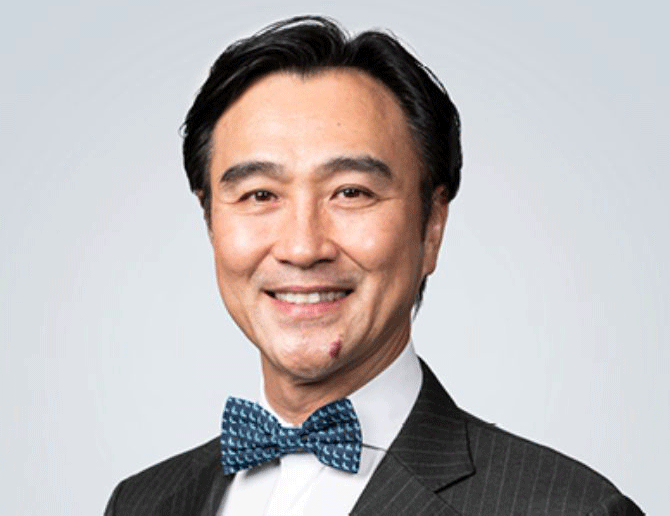
The strong hiring momentum has also given us confidence that we have the right platform, right culture and right teams of people for new joiners to shine and perform
Albert Chiu, EFG International
Meanwhile, RM productivity has risen by almost 50% per banker during the last two years against a largely flat adviser headcount in the region, providing compelling evidence that HSBC’s talent investment is translating into commercial outcomes.
Pure-play LGT Private Banking operates one of the most distinctive talent models in Asia. Senior management average tenure spans decades, ensuring continuity that multi-generational client families value deeply. The Liechtenstein-based bank’s graduate programme produced LGT’s current Singapore CEO – an internal promotion that reflects a development pipeline structurally differentiated from the external hiring model prevalent across the industry. RM headcount in Apac grew to 430 from 421 across the review period.
There is arguably one bank in Asia that has benefitted more than others post-Credit Suisse collapse when it comes to talent redistribution: EFG International. Tens of bankers from the defunct Swiss giant, as well as UBS, have joined EFG’s Hong Kong and Singapore platforms since 2023.
In 2025, Robin Heng – formerly the long-serving co-head of private banking at Bank of Singapore – was appointed vice-chairman for Southeast Asia at EFG, signalling the seriousness of EFG’s UHNW and Southeast Asian ambitions. As Asia CEO Albert Chiu recently told Euromoney: “The strong hiring momentum has also given us confidence that we have the right platform, right culture and right teams of people for new joiners to shine and perform.”
In terms of domestic markets in Asia, Maybank Private has pursued a deliberately selective and long-term talent model in contrast to the aggressive hiring cycles seen among some regional competitors. Rather than entering bidding wars for established bankers, Maybank focuses on internal promotion through its Premier-to-Private continuum: RMs who have built relationships at the Premier banking level arrive in the private bank already trusted by clients who have grown with them through the wealth journey.
In Taiwan, CTBC Bank expanded RM headcount by 16% in the year to June 2025. More than 80% of its RMs hold Certified Financial Planner (CFP) certification – giving CTBC the largest CFP-qualified team in Taiwan’s private banking industry. The bank has also implemented a new team-management layer to improve RM coaching, communication flow and productivity.
Product and solutions strength
Access to institutional-quality investment products has become the most consequential differentiator in the UHNW market. Falling interest rates created an urgency and an opportunity: clients with large cash balances needed to be redeployed, and the banks with the most credible DPM, alternatives and structured products platforms were best positioned to capture those flows.
The competition for client allocations to alternative investments intensified, with leading institutions expanding private equity, private credit, infrastructure and hedge fund access while simultaneously building evergreen structures that lower entry barriers for clients. DPM penetration rates have moved materially higher at the most advanced institutions in what is a vote of confidence by clients in their capabilities.
DBS Private Bank reconfigured its asset allocation framework in December 2024 to embed a 60/40 public/private split for UHNW clients, launching its CIO Diversified Alternatives Fund – described as Asia’s first solution integrating private markets into alternatives with monthly liquidity and lower entry thresholds. Hedge fund allocations nearly doubled year-on-year, while evergreen subscriptions also rose significantly amid material new product launches in these asset classes.
UBS recorded substantial, multi-billion-dollar NNA flows into managed discretionary solutions in Asia in 1H25, with DPM penetration reaching 14%. According to the Swiss bank’s data, 80% of discretionary portfolios outperformed advisory equivalents. Structured products remained a dominant solution for UBS in Asia, with tens of billions of dollars of notional traded during the review period for this MarketMap.
Meanwhile, Goldman Sachs PWM raised billions of dollars in private fundraising in Asia during the period examined for this MarketMap, providing regional UHNW clients access to strategies unavailable at more generalist institutions.
When it comes to pure-play private banks, Julius Baer expanded its alternatives platform substantially in a development that was rewarded with a surge in regional net fund flows into these products during the period reviewed for this MarketMap. Among its key product launches were capacity-constrained, top-quartile hedge fund managers, private credit, infrastructure and liquid alternative strategies. DPM AUM and active client accounts have also risen in the double digits in percentage term year-on-year.
Lombard Odier is recognised on the strength of its DPM platform, which is one of the most rigorously constructed and best performing in Asia. The firm’s strategic asset allocation (SAA) was refreshed in December 2024 to increase alternatives exposure, add standalone gold and introduce Swiss real estate to CHF-denominated portfolios. All balanced asset allocation funds (AAFs) are first quartile performers both net and gross of fees across multiple horizons.
Elsewhere, Bank of Singapore has built a proprietary modular SAA model – described by CEO Jason Moo as the world’s first to integrate local currency and international markets – developed by a recently hired chief portfolio strategist. The bank’s new Global Advisory Council has convened buyside CIOs and think tanks to inform clients on digital infrastructure, AI and sustainability themes.
Hong Kong’s CICC International Wealth Management brings a product architecture that is structurally differentiated from that offered by many of its international peers, converting its vast experience in mainland China investment banking relationships and cross-border capital flow expertise into a buyer-advisory platform of institutional depth.
CICC’s Private Funds Management team is deliberately counter-consensus: focusing on small-to-mid market buyout opportunities in Europe and the US. All six vintages of the strategy have generated annualised returns above 17%.
Staying on the cutting-edge of digital
The deployment of generative AI into the private banking front office in Asia crossed an important threshold in 2025. What had been a largely experimental technology one year earlier became a client-facing tool across onboarding, client servicing, investment recommendations and compliance.
The banks that had invested earliest and most systematically in data infrastructure, AI model training and change management were best positioned to translate this into genuine competitive advantage: shorter onboarding cycles, higher RM productivity, more personalised client interactions and faster, more accurate compliance processing.
DBS Private Bank is Asia’s most technologically advanced private bank, evidence reviewed for this MarketMap shows. Its AI programme generated hundreds of millions of Singapore dollars in tangible economic impact in 2024, powered by 1,500 AI/ML models across hundreds of use cases. Wealth Copilot, DBS-GPT and GenAI KYC screening gave RMs material productivity gains across the client lifecycle. AI-powered nudge engines delivered millions of hyper-personalised prompts to RMs in 2025. Active digital platform users among UHNW/HNW clients rose 40%, with active traders nearly tripling. DBS Digital Exchange handled more than $1.4 billion in HNW/UHNW cryptocurrency trading in 1H25.
Staying in Southeast Asia, Bank of Singapore has also been among the first private banks in the region to deploy agentic AI in practice. Its Source of Wealth Assistant tool uses drag-and-drop document processing to generate complete source of wealth reports, reducing compliance processing from 10 days to as little as one hour. The bank’s neXus Copilot uses large language models to customise investment pitches and client communications. The Bank of Singapore IX platform serves intermediary and external asset manager clients on a fully digital B2B basis – described by the lender as infinitely scalable, and essential to the intermediary business’s revenue growth of 30% during the review period.
In terms of pure-plays, Lombard Odier has demonstrated that digital leadership in private banking is not exclusively the domain of large, universal institutions. One important development in 2025 was the second-generation rollout of the Swiss bank’s G2/GX client management platform, which connects client data, portfolio history and advisory interactions in a single unified interface for relationship managers.
The bank also enhanced its My LO client account tool, which gives clients real-time access to portfolio valuations, CIO publications and transaction history through a secure digital channel. Its updated Your Wealth portfolio analytics tool provides clients with granular performance attribution, risk visualisation and asset allocation analysis across their DPM mandates.
In the Distinguished tier, CICC International Wealth Management stands out as one of the first wealth management institutions to implement a private deployment of DeepSeek, embedding generative AI across client interactions and portfolio management. Its latest capability, the Intelligent Allocation Navigator, uses AI to generate a tailored client investment proposal – drawing on thousands of products and current market conditions – in 30 seconds.
India’s Kotak Private Banking achieved digital onboarding for approximately 50% of advisory and fund management products and deployed KForce – a Salesforce-backed customer relationship management (CRM) system – providing a single customer view across the entire private banking operation. Mobile and net banking adoption reached more than 80% of active bank clients.
The next sustainable investing frontier
Sustainability in Asian private banking underwent a period of recalibration during the 2025 review period. Rather than retreating amid the politicisation of ESG in the US, top institutions deepened their sustainability integration. Among the key ways of doing so were by building philanthropic advisory infrastructure, embedding ESG into investment processes and engaging clients in genuine impact-oriented conversations.
For LGT, the credibility of its structurally integrated sustainability proposition derives directly from its ownership structure. The Princely House of Liechtenstein’s ownership gives LGT’s commitment a multi-generational authenticity that institutional competitors cannot manufacture. The LGT Apac Climate Conference in Singapore in October 2024 convened global and regional leaders on climate investment opportunities – reinforcing LGT’s position as a thought leader rather than merely a product distributor in sustainable investing. LGT Venture Philanthropy and the Lightrock impact investment platform extend the offer into genuine capital-at-risk impact investing.
Staying with pure-play private banks, Lombard Odier’s CLIC (circular, lean, inclusive and clean) sustainability framework is embedded across its investment process and reflected in all six ‘rethink investments’ themes: longevity; new generation; technology; net zero; nature; and infrastructure. The firm’s balanced CLIC mandates have consistently outperformed the Asset Risk Consultants (ARC) Balanced index, providing commercial validation that sustainability integration enhances rather than constrains returns.
BNP Paribas Wealth Management has chaired the Monetary Authority of Singapore (MAS) Private Banking Industry Philanthropy Working Group for the last few years – co-defining national standards for philanthropic advisory and governance in the city-state. The Bridge Foundation donor-advised fund (DAF) – a fully internal structure allowing multi-asset endowment-style investing – distinguishes the French bank from peers whose DAFs restrict clients in terms of asset classes.
Asia’s best private banks
DBS Private Bank
Euromoney places DBS Private Bank at the apex of this inaugural Asia MarketMap – a distinction earned across both performance axes simultaneously, rather than exceptional achievement on just one. Record AUM growth to SGD339 billion ($261 billion), SGD23.3 billion in net new money and total wealth management income of SGD5.43 billion confirm that Singapore’s structural advantages as a wealth hub are being monetised here more effectively than at any comparable competitor. The DPM subscription surge of 53% year-on-year, the Private Assets Club’s 12 marquee late-stage technology deals and the DBS Digital Exchange’s $1.4 billion in 1H25 cryptocurrency trading illustrate the breadth of a platform advantage that no single-line private bank can replicate. No institution in Asia has matched DBS’s simultaneous execution across AUM growth, fee income diversification, digital infrastructure and UHNW product depth.
Goldman Sachs Private Wealth Management
Goldman Sachs occupies a position of strategic deliberateness in Asian private banking. By limiting its focus to the $1 billion-plus segment, it avoids the commoditisation pressures that affect generalist institutions, deploying its institutional-grade alternatives platform, co-investment access and structured solutions on a client cohort willing – and able – to pay for genuine investment differentiation. With billions of dollars of private fund raising per year and the highest rate of RM productivity in terms of revenue, Goldman’s Asian UHNW franchise sets a quality benchmark that competitors acknowledge but cannot replicate without equivalent institutional infrastructure.
UBS Global Wealth Management
The numbers for UBS in Asia are difficult to dispute: invested assets were $746 billion as of 2Q25, up 19%. Perhaps more crucial is the bank’s success in bringing the best of UBS – across wealth, markets and investment banking – to Asia-Pacific clients. A dedicated OneUBS team – whose accountability is underlined by formal KPI tracking and an awards framework recognising collaborative deal flow – generated significant net new money from the UHNW cohort during the MarketMap review period. The coverage of three in five billionaires across Asia reflects the structural depth of relationships built over decades.
Julius Baer
Two decades into its Asian journey, Julius Baer’s Leading tier positioning reflects the compounding effects of consistent institutional execution. The 15% AUM growth to $151 billion in Asia-Pacific as of 2Q25, backed growing revenue per RM and a robust increase in transactional revenues highlight a platform operating with improving quality rather than merely improving scale. Asia now represents more than 25% of Julius Baer’s global AUM and workforce, a proportion that confirms the continent’s structural weight within the bank’s worldwide franchise rather than its status as a peripheral growth market.
HSBC Private Banking
Few structural advantages in Asian private banking are as difficult to replicate as HSBC’s. The combination of domestic-level presence in Hong Kong, deep mainland Chinese corporate and institutional banking relationships, and the scale of the Singapore franchise creates cross-border connectivity that pure offshore booking-centre models cannot replicate. Where international competitors must rely on third-party referrals or corridor agreements to access Chinese-origin deal flow, HSBC’s one-bank infrastructure routes client introductions from corporate and institutional banking directly to the private bank – a pipeline whose commercial value extends well beyond what AUM figures alone can capture.
Bank of Singapore
The growth delivered by Bank of Singapore during the review period are the culmination of a strategic repositioning that began nearly three years ago. AUM rose 15% to $135 billion as of 2Q25 – a milestone achieved alongside a hiring target of 500 relationship managers. Growth in net new money has surged, validating the success in converting new hires into net new money. Among the bank’s defined priorities, UHNW client assets grew strong, while the intermediary business – rebuilt under dedicated leadership following its restructuring – has blossomed.
BNP Paribas Wealth Management
BNP Paribas Wealth Management’s AUM in Asia increased by 13% to $108 billion as of 2Q25, driven by robust growth in client assets in Singapore. The Paris-based bank has noted the successful execution of several single-client tickets that each brought in more than $1 billion in fresh assets, all linked to its one-bank capabilities that link the wealth unit with corporate, institutional markets and investment banking. Notably, BNP Paribas has substantially grown its AUM per RM over the years, highlighting growing strength in the important UHNW segment.
Deutsche Bank Private Bank
Deutsche Bank’s UHNW and family office revenue grew robustly across Asia during the review period, thanks to a strategic architecture designed to service the complex needs of this client segment. The 25 dedicated UHNW bankers responsible for this rise do not operate as a standalone wealth unit, but are the tip of a ‘one-bank’ spear that draws in corporate finance advisory, capital markets origination and transaction banking to construct a client proposition that no pure-play private bank can credibly replicate.
LGT Private Banking
The ownership structure is the strategy at LGT. The Princely House of Liechtenstein’s multi-generational stewardship of the institution gives LGT’s long-termism a credibility that listed or private-equity-backed competitors cannot replicate – and it is this credibility that resonates with the multi-generational family clients that define LGT’s target market in Asia-Pacific. The clearest sign of this success is the 17% rise in AUM to $145 billion in the region as of 2Q 2025.
Lombard Odier
Lombard Odier’s case for Outstanding tier recognition rests on a single, powerful argument: the depth and performance of its DPM platform is unmatched among Asia’s private banks of comparable scale. All balanced AAFs perform in the first quartile of their peer group – net of fees – across key horizons. The SAA was refreshed in December 2024 to increase alternatives exposure, add standalone gold and introduce Swiss real estate to CHF-denominated portfolios – a recalibration that preceded significant market dislocations and rewarded clients with pre-positioned portfolios. The balanced strategy and its EUR equivalent have outperformed their ARC benchmarks with the consistency that institutional allocators typically associate with specialist asset managers rather than private banks.
EFG Bank
Asia is one of EFG International’s fastest-growing regions, with AUM expanding by 18% to $47 billion in the 12 months to 2Q25. The absorption of former Credit Suisse and UBS teams in 2023, a Standard Chartered team in 2024 and the appointment of Bank of Singapore veteran Robin Heng in 2025 have built a Greater China and Southeast Asia franchise into one capable of competing directly with the most-established regional players.
Kotak Private Banking
India’s private banking market has few institutions that are more comprehensively embedded into the country’s U/HNW ecology than Kotak. Managing wealth for 60% of India’s top 100 Forbes-ranked families, operating the country’s oldest and largest family office practice and running the largest Registered Investment Adviser practice in India are among the commercial fortifications that have secured the bank its placed in this MarketMap.
Maybank Private
The most compelling Asean-local private banking story in this MarketMap is Maybank. AUM grew 34% year-on-year to $18 billion in 1H25 – driven by the player’s genuine onshore presence across all key Asean markets through Maybank Group’s retail and commercial banking network.
CICC International Wealth Management
At a time when mainland Chinese UHNW families are diversifying their offshore wealth with an urgency driven by geopolitical uncertainty, CICC International Wealth Management offers something no Swiss or US institution can fully replicate: the investment banking depth, cultural proximity and capital markets insight of China’s leading securities firm, delivered into an international private banking framework.
CTBC Bank
Taiwan’s largest privately owned bank enters this MarketMap with a private banking performance characterised by strong AUM growth both in its onshore and offshore operations, which have similarly been matched by a robust performance in terms of fee revenue. Success is in part due to its innovation: the Virtual Family Office – launched in 1Q25 and covering investment portfolio management, generational wealth transfer, social impact creation, family cohesion and concierge services – was the first such product launched by any bank in Taiwan.
Looking ahead
Four imperatives are shaping which institutions will define the next chapter of Asian private banking.
Client consolidation is a primary battleground. While Asian U/HNWIs have historically held relationships with a bigger variety of private banks than clients in Europe and North America, the long-term trend will likely be towards consolidation. As clients increasingly reward their most trusted providers with greater wallet share, institutions with deep product breadth, credible CIO functions and deeper advisory relationships will capture more share.
Alternatives access as a baseline expectation. Institutional-grade private equity, private credit, infrastructure and evergreen co-investment are no longer differentiators for the largest banks – they are table stakes for the UHNW and upper-HNW segments. Institutions that cannot offer these capabilities risk ceding wallet share.
AI as a front-office productivity multiplier. The gap between those with generative AI at scale and those still in early deployment phases will widen materially during the next 12 to 24 months. The banks featured at the top of this MarketMap are already measuring AI in hundreds of millions of dollars of annual economic impact.
Next-generation readiness as a retention strategy. The generational wealth transfer now under way across Asia is the largest in the region’s private banking history. Institutions with established next-gen programmes will retain assets through transitions that competitors will lose to inertia, relationship discontinuity or product mismatch with younger, digitally native clients.