For Emirates Islamic, 2025 saw years of investment in scale, innovation and customer experience crystallise into one of the strongest all-round performances in regional Islamic banking.
The bank delivered record profitability during the year, with net profit rising 19% to AED3.3 billion, supported by strong growth across funded and non-funded income streams. Customer financing increased 26%, while deposits rose 33%, reflecting continued balance-sheet expansion in an increasingly competitive UAE banking market. Importantly, the bank achieved this growth while maintaining strong liquidity, capital ratios and healthy margins, supported by a strategic focus on current account and savings account (CASA) growth.
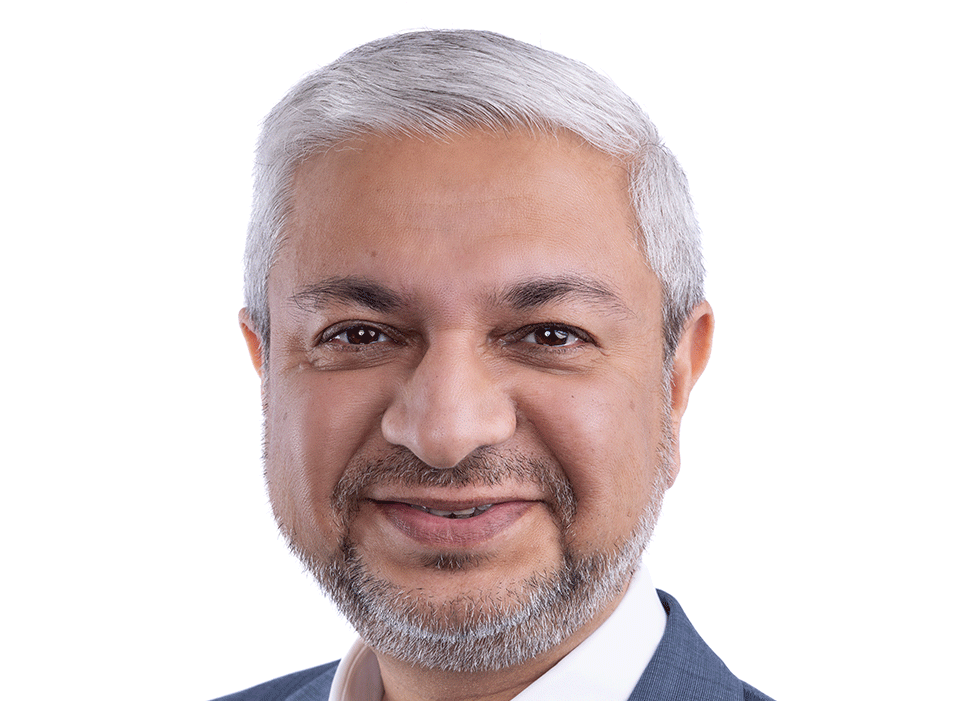
The performance reflected the final year of a three-year strategic plan built around five core priorities: market-share growth, customer experience, digitisation, environmental, social and governance (ESG) and data analytics; and talent development. According to Atif Iqbal, Emirates Islamic’s head of strategy, the bank has deliberately repositioned itself over recent years from a traditionally Emirati-focused institution into a broader mainstream Islamic banking franchise.
“We are a bank for everyone,” Iqbal says. “We get customers who want Shariah, we get customers who want ESG, we get customers who want good service and we get customers who believe in our digital platforms.”
That strategy translated into strong momentum across retail, small and medium-sized enterprises (SME) and corporate banking.
Retail banking and wealth management generated record annual revenue of AED3.9 billion, while net profit rose 15% to AED1.7 billion. Emirates Islamic added 182,000 new-to-bank customers during the year, supported by growth across personal finance, cards and transactional banking. The bank’s card business emerged as a particularly important differentiator, anchored by the launch of the region’s first Amazon-branded credit card in partnership with Amazon UAE and Mastercard – which the bank described as the fastest-growing newly launched card proposition in the UAE market.
Corporate and institutional banking also delivered strong growth, with financing increasing around 28%, deposits rising 48% and net profit surging more than 50% year-on-year by September 2025. Emirates Islamic continued expanding its role in ESG and syndicated financing, participating in more than $2.9 billion of ESG-related facilities during the year.
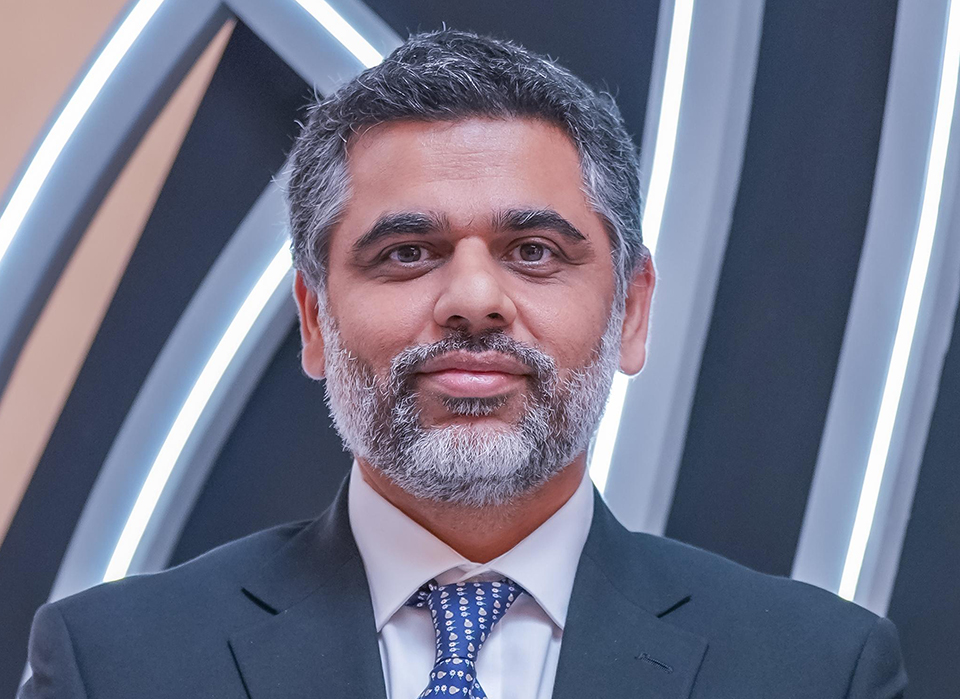
We are a bank for everyone. We get customers who want Shariah, we get customers who want ESG, we get customers who want good service and we get customers who believe in our digital platforms
Atif Iqbal
The bank also strengthened its innovation credentials through several landmark initiatives. In 2025, Emirates Islamic issued the world’s first sustainability-linked financing sukuk, a $500 million transaction that attracted global investor demand and aligned with both Emirates NBD Group sustainability objectives and the UAE’s Net Zero 2050 agenda.
Meanwhile, Emirates Islamic launched what it described as the first fully digital Shariah-compliant supply-chain-finance platform in the market, designed to streamline invoice settlement and improve liquidity access for suppliers and vendors.
Digitisation remained central to the bank’s strategy. Emirates Islamic’s EI+ platform surpassed 613,000 registered users with 91% active usage, while tablet banking accounted for 97% of credit-card bookings and 91% of personal-finance disbursements. The bank also expanded artificial-intelligence (AI) deployment across frontline and operational workflows, including a discrepancy analysis portal designed to identify onboarding and processing errors.
Customer-experience metrics reflected the broader operational progress. Emirates Islamic reported a net promoter score (NPS) of 54 and customer satisfaction (CSAT) score of 89%, while KPMG recognised it as the UAE’s most-improved brand in its Customer Experience Excellence 2025 report.
Beyond financial and technological performance, Emirates Islamic continued investing heavily in talent and social impact. The bank maintained a relatively high Emiratisation rate of 43.5%, while women held 24% of leadership roles. Its charity fund contributed more than AED46 million to social and humanitarian initiatives during the year.
Overall, Emirates Islamic demonstrated the ability to combine rapid growth, product innovation, digital sophistication and Shariah-compliant integrity within a disciplined and sustainably profitable business model.