1. Becoming strategic: From wealth caretaker to family-enterprise architect
Private banking’s rising influence within Asian financial groups stems from its outsized contribution to margins and fees. With net interest margins significantly exceeding those of retail banking, the sector now commands greater strategic priority.
Equally critical is the sector’s role in fostering client loyalty. “Corporate bankers negotiate with CFOs; private bankers debate succession plans on a chairman’s yacht,” notes a Beijing-based banker. Such proximity to ultra-high-net-worth (UHNW) families enables banks to leverage decade-long relationships that lead to corporate advisory roles, particularly in IPO execution, M&A and debt financing.

Award submissions from leading banks highlight this evolution, showcasing how multi-generational wealth ties have secured mandates for family-owned businesses. One case study details a decade-long private banking relationship that paved the way for structuring a landmark IPO and subsequent equity placements. By integrating wealth management expertise with investment banking capabilities, institutions now position private banking as the nexus for cross-divisional collaboration – a trend epitomised by the industry’s embrace of ‘one bank’ operational models.
Banks are restructuring to align with this vision. Bank of China, for instance, replaced its traditional family office with an ‘entrepreneur office’, targeting business owners holistically, reportedly boosting deposits, AUM and fee income.
Similarly, Citi’s 2025 private banking restructuring has put the family office group as part of integrated client engagement.
HSBC’s 2024 restructuring also exemplifies this trend, streamlining operations into four strategic divisions: Hong Kong, UK, corporate and institutional banking, and international wealth and premier banking. The bank describes the move as a sharpening focus on markets and sectors where it holds competitive advantages. While all units retain priority, the integrated wealth division – combining retail banking, wealth management and global private banking – underscores private banking’s elevated role in delivering cross-segment solutions.
This strategic shift underscores a broader recognition: as Asian wealth becomes increasingly intertwined with corporate capital, private banks must transcend traditional boundaries to remain relevant. The institutions succeeding are those embedding themselves as central advisers to both family portfolios and enterprise balance sheets. Private bankers are transitioning from wealth gatekeepers to architects of complex family enterprise solutions.
2. Transforming operations: A path towards centralisation
Asian private banks are undergoing structural reinvention, moving away from fragmented retail-banking dependencies toward centralised wealth management units. This shift reflects mounting pressure to professionalise services for increasingly sophisticated UHNW clients, while retaining operational scale.
Historically, private banking in large markets such as China operated as a premium layer within retail divisions, relying on provincial and city-level branch networks for client acquisition and service delivery. Recent years have seen leading institutions decouple private banking entirely, establishing it as a standalone division with independent budgeting and leadership structures – a status parallel to those of corporate and retail banking.
China Merchants Bank (CMB) pioneered this transition with its private banking centre, which now spans 92 onshore cities and six key offshore cities. Additionally, CMB introduced the 1+N model, pairing one relationship manager (RM) with multiple product specialists to replace the traditional lone-RM approach.
The framework, now emulated by peers including Citic Bank, centralises client accounts previously managed across regional branches into dedicated wealth hubs. Euromoney understands the model has correlated with improved client retention and assets under management (AUM) growth, though institutions decline to disclose precise metrics.
The centralisation process requires the migration of clients. When customers’ AUM crosses pre-determined thresholds – often between US$1 million and US$5 million – they are transferred from branch-based RMs to senior private banking experts housed in dedicated centres.
We’re asking RMs to relinquish their lone-wolf status and become orchestra conductors
Shanghai-based private banking head
The transition exposes operational faultlines. Compensation disputes between branch RMs who source clients and centralised advisers remain contentious. Some banks now deploy dual-credit systems, splitting revenue between originators and advisers – a model also trialled by Southeast Asian lenders to mitigate RM attrition.
Geographic disparities persist, with clients in Chengdu or Hyderabad receiving less frequent access to elite advisers than those in Shanghai or Mumbai. Several banks now operate fly-in programmes, dispatching senior advisers from financial hubs to secondary cities quarterly – a tactic first popularised in Europe’s cross-border private banking market.
Cultural resistance compounds these challenges. “We’re asking RMs to relinquish their lone-wolf status and become orchestra conductors,” says a Shanghai-based private banking head. Some banks see RM defections amid tensions between individual incentives and institutional priorities.
Full centralisation is more the exception rather than the norm. Most institutions deploy hybrid models blending headquarters-led expertise with local execution. Ping An Bank’s 1+1+N system typifies this balance: a branch-based RM handles daily client needs, while a senior head office adviser oversees strategic portfolio decisions and complex transactions, supported by internal and external specialists. This structure leverages Ping An’s insurance conglomerate resources while maintaining retail networks for client retention.
India’s HDFC Bank exemplifies scaled hybridisation. Its hub-and-spoke framework deploys 73 wealth hubs staffed by investment specialists to serve UHNW clients sourced through 850 retail branches. While hubs operate with autonomy on product delivery, spokes remain critical for initial client acquisition – a recognition of India’s vast geography and entrenched branch banking culture.
However, the direction of travel is clear: senior bankers acknowledge centralisation as the sector’s logical endpoint. As one Hong Kong-based banker notes: “Clients now demand Swiss-style expertise, but delivered at Asian scale. That requires structural ambition beyond bolting PB onto retail.”
3. Going beyond borders: Wealth mobility mirrors industrial migration
Asia’s private banks are recalibrating strategies to align with a tectonic wealth migration: the redirection of industrial capital from China to Southeast Asia, India and beyond. This trend, driven by supply-chain diversification and energy transitions – and further amplified by newly implemented US tariff policies under president Donald Trump – is creating complex cross-border financial demands that banks must address through integrated regional expertise.
Chinese manufacturers establishing Thai electric vehicle (EV) plants or Indonesian battery facilities now require synchronised solutions spanning jurisdictions. In this year’s research period, Euromoney found banks increasingly position cross-regional coordination and cross-divisional integration as complementary pillars of their value proposition.
A Shenzhen-based conglomerate expanding into Thailand, for instance, may need Singaporean holding structures, Malaysian currency hedges and Indonesia-based equity incentive plans, all while managing treasury flows from its headquarters.
We see a lot of interest in terms of investments from Middle East into Asia and Asia into Middle East. We want to be in the middle of these investment flows and trade flows
Aladdin Hangari, HSBC
One Chinese institution detailed how it coordinated 11 specialist teams – from cross-border tax structuring to family governance – to support a Zhejiang battery company’s Southeast Asian expansion.
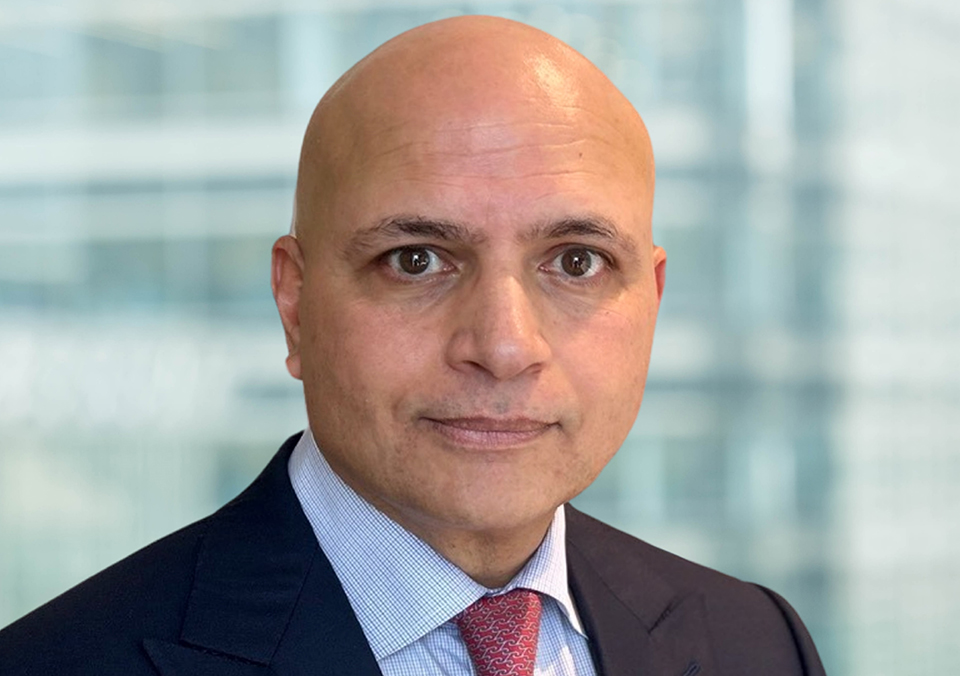
The expansion dynamic now extends beyond intra-Asia flows to include the Middle East, with capital moving bidirectionally. “We see definitely a lot of interest both in terms of investments from Middle East into Asia and Asia into Middle East,” says Aladdin Hangari, head of HSBC global private banking for the Middle East and North Africa. “We want to be in the middle of these investment flows and trade flows.” HSBC’s strategy emphasises its role as a connector of cross-border capital and international wealth.
Wealth mobility now traverses both geographic frontiers and generational divides. A case study from a leading global bank reveals how succession planning for a first-generation Asian industrialist’s empire required solutions across six jurisdictions. The bank integrated investment advisory, corporate lending and asset management services to transition the client’s children into bespoke family office structures, later connecting them with European legacy families for intergenerational knowledge transfer.
In this evolving landscape, three factors emerge as critical differentiators: physical hubs in origin and destination markets; regulatory adjacency to navigate Asia’s fragmented financial regimes; and generational continuity to retain migrating wealth across lifespans.
Yet, local banks argue cultural familiarity provides an edge in serving entrepreneurs expanding abroad. Competition in this space is intensifying. “Today’s differentiator isn’t just capability – it’s willingness to go the extra mile for clients,” says the head of a top Chinese private bank, which now assists clients in identifying local partners, screening joint-venture candidates and even vetting suppliers. The executive, who previously led the bank’s Indonesia operations and now oversees its private banking arm, adds: “Having navigated these markets for years, we’ve witnessed countless pitfalls. Our value lies in helping clients avoid them.”
4. Revolutionising trusts: Democratisation meets sophistication
High-net-worth clients across Asia increasingly view trusts as non-negotiable tools for shielding assets from business risks, marital disputes and geopolitical volatility. Chinese institutions exemplify this trend: Ping An Bank’s family trust AUM surpassed Rmb180 billion (US$25 billion) by September 2024, while Bank of China reported 52.83% year-on-year growth in family trust clients, underscoring deepening adoption.
This is a trend that transcends borders. Philippine institutions such as BDO Unibank recorded a 13.9% increase in estate-related trust agreements between 2023 and 2024, reaching PHP159.2 billion (US$2.8 billion), while identifying a pipeline of 177 family groups seeking bespoke solutions.
At the same time, trust structures have also become more complex, with institutions now routinely integrating equity, real estate and art into trust frameworks – Bank of China’s 2024 launch of its first domestic real estate trust highlights this progression.
Regulatory tailwinds amplify demand. China’s Trust Law amendments and subsequent three-category trust classification system – family, family service, charitable – have lowered the entry threshold to Rmb1 million, igniting mass-market adoption.
The industry is bifurcating strategically. For UHNW clients, customisation dominates, with banks deploying specialised service lines spanning legacy planning, health management and cross-border coordination through offshore hubs.
Conversely, mass-affluent solutions prioritise scalability – CMB’s automated trust establishment platform slashes processing times from 38 days to three, reflecting industry-wide efficiency pushes.
Margins remain narrow as institutions prioritise market penetration. “Industrialised processes clash with the inherently personal nature of trusts,” notes a Shanghai-based private banking head. “Many players are sacrificing short-term profitability to secure future client relationships.”
Other incumbents, however, resist democratisation. Several regional stalwarts maintain minimum thresholds, focusing on lucrative high-margin mandates.
As always, the critical question remains: Is there genuine demand from end-customers, or is this perceived demand merely as a construct by banks eager to expand their service offerings and market share?