
FNB is redefining excellence in private banking and wealth management. This year, Euromoney named the South Africa-based outfit the best private bank in Africa, as well as the region’s best for succession planning and serving ultra-high-net-worth (UHNW) individuals.
The list of services it delivers to wealthy clients is long. It adapts its offering to meet the needs of distinct lifestyles, professions and financial goals. For those looking to grow wealth fast – such as tech-savvy entrepreneurs – it delivers dynamic financial and advisory services. For retirees, the focus pivots to wealth preservation and income planning.
And when it comes to global citizens, FNB Wealth aims to simplify financial management, to cater to clients looking to navigate offshore investments and lifestyles and adapt to new or changing regulatory environments. By customising onshore and offshore investment options, the wealth manager supports the client’s long-term financial goals.
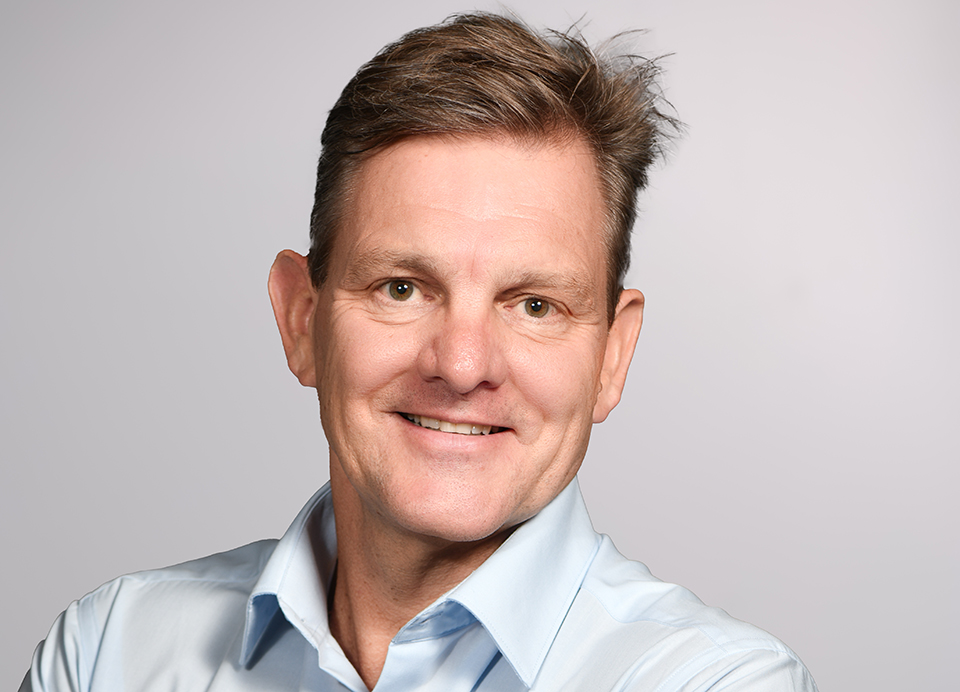
Global financial mobility remains as much of a key theme for clients as ever. “We address the complexities of cross-border wealth transfer, including multi-jurisdictional tax regimes, inheritance laws and governance structures, ensuring seamless succession planning,” says Eric Enslin, head of private banking and advisory at FNB Wealth.
“Through our multi-family-office offering, FNB provides tailored solutions to clients with family members and business interests across different jurisdictions,” he adds. Its international banking platform guarantees customers access to 25 stock exchanges, allowing them to diversify portfolios across global markets.
Understanding the next generation is also of paramount importance. The firm’s trust solutions have been carefully crafted to address various wealth preservation and transfer scenarios. ‘Dry’ trusts are dormant structures that spring into action to receive future assets at any time. The ‘cash builder’ trust facilitates foreign currency growth via its Channel Islands facilities. ‘Bespoke’ trusts handle diverse international assets, including real estate.
Wealth services available to younger clients include Banking on our Future, a feature tailored for use by younger adults. Its global account is designed for use by anyone looking to take time out to travel or learn before university.
This is key to FNB Wealth and its clients for two main reasons. First, because the next 15 years will see a huge amount of wealth flow from one generation to the next, in Africa and around the world, and any private bank that fails to prepare to benefit from that unique opportunity is set to fail.
Second, because the next generation of wealthy clients is different from their parents. “The next generation approaches wealth with a focus on sustainability, technology and diversification, prioritising financial education and ethical investments to build a legacy,” says Enslin. He adds: “At FNB, we recognise that wealth is more than assets – it’s a legacy to be protected for future generations.”
Related to next-gen, succession planning is another core facet of FNB Wealth’s offering. Each client has access to a complex advisory network led by a private banker and supported by a host of specialists, including fiduciary and tax experts, offshore and exchange control advisers and various wealth managers.
Among many other things, the team oversees court appraisals and debt resolution, mitigates tax on charitable donations and manages wills and trusts. It also oversees estate planning and family governance as well as philanthropic initiatives, to ensure wealth is transferred and preserved in the most efficient way.
The old maxim about wealth being won by one generation and lost by the next is as true in Africa as it is any part of the world. Wealth is often frittered away as it moves from one set of hands to the next, due to poor communication, bad money management or sheer bad luck. “In the coming decades, a significant transfer of wealth will take place among South African and broader African clients,” says Enslin. “Without careful and strategic succession planning, this transition risks fragmentation, mismanagement, or loss. A legacy is not merely about the accumulation of wealth but ensuring its preservation and continuity for future generations.”
The judges’ eye was also collectively drawn to several pioneering initiatives in the sustainability space, including its Carbon Footprint Calculator
During the awards period, FNB introduced several industry-first initiatives that reinforce its status as a pioneer of responsible wealth management. Its Carbon Footprint Calculator helps UHNW clients understand and manage their environmental impact. Security is another key consideration: a GuardMe panic button, embedded in its banking app, ensures financial and physical security for clients and their loved ones.
The private bank has long believed that alternative investments play a valuable and even vital role in providing a smoother journey for clients – helping them achieve their investment goals. FNB Wealth advises clients to follow its in-house strategy of choice: the firm has held a 25%-30% exposure to alternatives – spanning private equity, private debt and hedge funds – for more than a decade, to the benefit of its clients.
“Embracing alternative investments, the fastest growing asset class globally outside of passives, ensures that we provide relevant opportunities to our customers which appropriately diversifies their overall investment portfolio and promotes financial resilience – and ultimately a higher likelihood of meeting their financial goals,” notes Enslin.
He adds: “Our South African clients – and our African clients as a wider group – are becoming more interested in alternatives and in diversifying their portfolios to make them more global, every day. This is a fundamental shift – across Africa, individuals are looking to make their portfolios more, not less, global by nature.”