As global trade adjusts to geopolitical shifts, inflation and evolving supply chains, banks have moved beyond their traditional role as facilitators to become strategic enablers, guiding businesses through uncertainty with speed and precision. In 2025, excellence in trade finance is no longer just about providing working capital – it’s about collaboration, flexibility and innovation.
This year’s rankings, based on insights from more than 13,500 treasurers and trade specialists across 100+ countries, reveal that the top providers set themselves apart with a comprehensive product suite designed to meet the ever-changing realities of global trade. Technology remains the biggest differentiator, with leading banks investing heavily in digital infrastructure, automation and AI-driven solutions. The digital shift is not just enhancing efficiency – it’s allowing banks to redeploy resources toward value-added services, strengthening client relationships. A strong digital infrastructure is the key enabler for excellence in client service.
The banks that stand out are those that combine global scale with deep local expertise, blending traditional offerings with cutting-edge innovation. This report explores what sets the top players apart – both globally and regionally – offering some insights into their plans.
Setting the benchmark for excellence in trade finance in 2025
Digitalisation, artificial intelligence, seamless transactions and client-focused solutions define excellence in trade finance in 2025. As businesses grapple with supply chain disruptions, regulatory changes and uncertainty, banks are moving beyond traditional financing, positioning themselves as strategic enablers of clients’ growth.

Trade finance products are evolving rapidly, driven by a need for greater flexibility, efficiency and risk mitigation. Banks are expanding their offerings beyond letters of credit and guarantees, incorporating a wider product suite, including supply chain finance, structured trade solutions or receivables financing to help businesses optimise working capital. Sustainability is also becoming increasingly important, with banks introducing ESG-linked trade finance solutions that encourage businesses to adopt greener practices. A key differentiator between the top-10 trade finance providers and the rest of the market is the strength of their foreign exchange and advisory services, which set them apart.
This differentiation is driven by the macroeconomic landscape. As trade corridors evolve, economic shifts are prompting corporates to diversify sourcing strategies and explore new trade routes, increasing demand for banks with strong cross-border expertise. The ability to navigate geopolitical risks, regulatory challenges and sustainability requirements is now a defining factor, with leading providers leveraging their global reach and advisory strength to help clients capitalise on new opportunities.
Technology is at the heart of this transformation. AI-driven platforms are revolutionising document processing, reducing turnaround times from hours to minutes. Trade finance portals are evolving into fully digital ecosystems, allowing businesses to manage guarantees, receivables and supply chain financing within a single, automated interface. Embedded finance solutions are integrating trade finance directly into corporate ERP systems, facilitating seamless transactions within existing workflows. Top-10 providers globally are clearly differentiating from the rest of the market from technological capabilities perspective – spanning transaction origination, platform functionality, integration with the wider supply chain workflow and reporting. Whether proprietary or developed in collaboration with fintech and software partners, leading banks are setting themselves apart through cutting-edge digital solutions.
This digital shift is driving efficiency and automation, as banks reconfigure their trade finance teams to deliver value to clients. The goal is clear: eliminate manual processes, accelerate transactions and provide clients with real-time financial insights that drive smarter decision-making. The top-10 providers are redefining their workforce strategy, focusing on advisory services to support corporates in structuring cross-border transactions, accessing sustainable finance solutions and ensuring credit availability.
Trade products adapted to client needs
What we see more and more is product development driven by client demand and client needs. While co-creation processes are considerably more frequent when we talk about platform (connectivity) or cash management activities, we start to see strategies being developed based on client needs in trade finance as well.
HSBC is a prime example, as its trade finance offerings are designed to meet the diverse needs of businesses operating in a complex global environment. The bank’s comprehensive suite of services includes traditional instruments such as letters of credit and guarantees, as well as innovative solutions such as supply chain finance and digital platforms. By integrating advanced technology into its services, HSBC enhances efficiency and provides clients with real-time insights into their trade transactions. This blend of traditional expertise and modern innovation enables HSBC to support businesses in navigating the intricacies of international trade effectively. Vivek Ramachandran, head of global trade solutions, emphasises: “In times of uncertainty, HSBC stands by its clients, helping them navigate new risks, form partnerships and grow sustainably. We are their global connectors, innovative problem solvers and strategic partners.”
These SMEs need greater access to financing to support their operations and growth. Hence, we are adapting and evolving our products to meet this new reality.
Mencía Bobo, Santander
Deutsche Bank (DB) is focusing on servicing clients’ needs today. “Rather than try to predict the future, we focus on what our clients are telling us now and what we are confident will not change amidst the uncertainty, and anchor our strategy to these themes,” explains Atul Jain, global co-head of trade finance and lending. The bank’s strategy is driven by key themes such as corporate supply chain resilience, regionalisation and localisation. As firms restructure supply chains to mitigate geopolitical and economic risks, DB is developing working capital solutions that are more advisory-driven and structured. Jain highlights that bank’s ability to provide comprehensive risk management is a key differentiator, ensuring clients can navigate volatile markets with confidence. A core pillar of DB’s strategy is leveraging its export credit agency (ECA) coverage, in response to the increasing role of government-backed financing in corporate trade and investment.
Santander has increased its focus on supporting its clients on strategic transactions, either event-driven, such as in the case of M&A, or addressing their critical needs, such as securing key suppliers or increasing the resilience of their supply chains. Mencía Bobo, global head of global transaction banking at Santander CIB, explains: “Our new generation of trade finance products has been developed with this objective in mind, and we are pleased to have been already trusted by several clients worldwide as a partner in very strategic situations, where our solutions have made the difference.”
Banks are increasingly acknowledging that traditional trade finance instruments need to be adapted and refined to better serve the growing small and medium enterprises (SME) segment. Santander, UniCredit and Mashreq discuss about catering for the needs of this segments.
Santander is integrating trade finance into non-financial processes, making funding for SMEs more accessible. “These SMEs need greater access to financing to support their operations and growth. Hence, we are adapting and evolving our products to meet this new reality,” highlights Bobo. Such solutions include digital factors, buy now, pay later (BNPL), group debit or purchase order financing.
Corporates across all UniCredit markets benefit from the bank’s cross-border expertise and fully integrated digital platforms, which provide streamlined access to tailored trade finance and working capital solutions. “This is especially critical for SMEs, which are often underserved due to the complexity of trade finance products,” advises Francesca Nenci, head of group trade and corresponding banking at UniCredit.
Mashreq is an example of how a digital-first mindset is shaping the way the bank responds to the market needs. Their suite of trade finance offerings caters to a wide range of businesses, from SMEs to large multinational corporations. “Our comprehensive suite of solutions – spanning structured trade finance, supply chain financing and Islamic trade offerings – ensures that businesses of all sizes can navigate complex global trade environments with agility,” explains Ahmed Abdelaal, group CEO of Mashreq.
Sustainability is an increasing topic of focus, both driven by the regulators across the world, but also by the corporates themselves, which started or are willing to start their green journey.
Sabine Koszteczky, head of trade finance at Raiffeisen Bank International (RBI), highlights the importance of ESG for the trade finance space, saying: “As an ESG pioneer in Central and Eastern Europe, RBI remains committed to promoting sustainability in trade finance, supporting our customers in transitioning to more sustainable business practices.” RBI introduced an enhanced ESG flagging tool, allowing users to track and transfer ESG-relevant attributes between transactions, ensuring compliance with evolving EU and local government regulations. Incentivisation of ESG-eligible transactions is triggered automatically, while RBI can monitor its ESG portfolio daily.
As an ESG pioneer in Central and Eastern Europe, RBI remains committed to promoting sustainability in trade finance, supporting our customers in transitioning to more sustainable business practices.
Sabine Koszteczky, Raiffeisen Bank International (RBI)
BBVA is reshaping supply chain finance by integrating sustainability into financial products, creating a collaborative framework that benefits both buyers and suppliers. With sector-specific methodologies and carbon footprint tracking, the bank helps suppliers align with buyers’ ESG goals. Beyond financial incentives, BBVA supports suppliers with tailored investment solutions to facilitate their transition to greener operations.
Ultimately, sustainability in the trade finance ecosystem can only achieve meaningful progress if all stakeholders collaborate to establish consistent definitions, reporting standards and open-access databases under a unified global framework. The International Chamber of Commerce (ICC) plays a pivotal role in driving standardisation, with many of the world’s leading banks actively supporting its initiatives to create a harmonised landscape. “We continue to play our role in shaping the future of the industry and are proud to be the first bank to adopt the ICC sustainable trade finance guidelines,” explains Sofia Hammoucha, global head of trade and working capital at Standard Chartered Bank. The bank recently launched sustainable finance variants of its borrowing base trade loans (BBTL) across key markets, including the US, UK, UAE, South Africa, Singapore and Hong Kong. The solution integrates ESG criteria into the financing mechanism, these loans supporting clients in their transition journey.
Strategic international expansion
A key insight from this year’s survey is the increasing significance of international trade activities. FX capabilities and advisory services have become the primary differentiators for the top-10 global trade finance providers, reinforcing their role as strategic partners in supporting clients’ international growth and risk management. In response to evolving client needs, many global banks are adapting their strategies, either by aligning with shifting trade flows, strengthening core corridors or expanding their international presence.
At the heart of our Global Hausbank strategy is a deep focus and dedication to support the international growth ambitions of our multinational corporate clients.
Atul Jain, Deutsche Bank
Deutsche Bank (DB) has refined its client strategy while maintaining its core focus on global multinationals, which remain central to its trade finance business. “At the heart of our Global Hausbank strategy is a deep focus and dedication to support the international growth ambitions of our multinational corporate clients,” highlights Atul Jain, global co-head of trade finance and lending.
Jain highlights a few corridors that gained prominence in recent months. Central Asia has emerged as a key hub, reflecting increased trade and investment opportunities in the region. DB has also observed rising investment flows between major economic centres, reinforcing its position as a key enabler of cross-border trade. Jain provides a few examples, including Chinese corporates expanding into Central and Eastern Europe, while Indian firms are strengthening their presence in the Middle East and Africa. Simultaneously, European corporates are ramping up operations in India, aligning with the China+ strategy that is driving investment into Asean markets. On the other side of the globe, Australian companies are increasingly expanding into the US, leveraging existing trade relationships.
A global network is crucial, but just as important is having key trade corridors at the core of a bank’s offering. Standard Chartered Bank (SCB) stands out by effectively serving both clients’ global headquarters and local offices, leveraging its extensive international presence and deep local expertise. “Our presence on both ends of the most dynamic trade corridors enable us to offer our clients end to end and bespoke Trade Finance solutions that cater to the specific needs of our clients,” explains Sofia Hammoucha, global head of trade and working capital at SCB.
Banks increasingly recognise that a global presence is a key success factor in trade finance. Mashreq is among the bank that prioritise international expansion, building a global structure, but driven by the core digital offering. “Looking ahead, our international hubs in Hong Kong, India, the UK and the US will undergo significant transformation over the next 12 to 18 months,” highlights Ahmed Abdelaal, group CEO of Mashreq. “These centres will harness the full power of Mashreq NEO CORP to deliver hyper-personalised trade finance experiences, seamlessly integrated with local and global ecosystems.”
Technology driving change
Trade finance has come a long way from its paper-heavy past, with digitalisation now at the heart of the industry’s transformation. In just a few years, major banks have rolled out advanced digital solutions, streamlining processes that were once slow and manual. And technology is what really sets the top-10 providers globally apart from the rest. Some banks decided to completely rebuild their platforms, while others are enhancing existing platforms, making strategic upgrades to stay ahead. Meanwhile, the most forward-thinking banks are already experimenting with AI and automation.
We’re building the future of finance by embedding solutions directly within client platforms.
Vivek Ramachandran, HSBC
A prime example of platform re-engineering is HSBC Trade Solutions (HTS). “We’ve invested to re-platform our whole trade business,” says Vivek Ramachandran, head of global trade solutions. “We’re building the future of finance by embedding solutions directly within client platforms.” By integrating automation and data insights, HSBC enhances efficiency while equipping clients with real-time information to make more informed trade decisions.
Another bank which made significant moves is Mashreq. Its NEO CORP platform provides clients with seamless, intuitive and efficient digital capabilities. Successfully introduced in Bahrain, Kuwait and Qatar in 2024, the platform is set for further expansion into Egypt and the UAE in 2025, with enhanced open account solutions designed specifically for these markets.
As the trade world is progressing in its digitalisation journey, a key enabler is regulation. Crédit Agricole CIB takes full advantage of this. Following France’s adoption of the model law on electronic transferable records (MLETR) in mid-2024, the bank has been actively developing solutions to enable fully electronic trade flows. As Dominique Honoré, head of Global trade and commodities, explains: “We are currently experimenting with a few partners to find the best solution, which would work end-to-end, focusing currently on facilitating fully electronic flows for France-UK trade transactions, considering that both countries are MLETR compliant.”
In the meantime, banks remain focused on ensuring that the transaction initiation is digital. “In the last quarter of 2025, 35% of all client applications were sent to Raiffeisen Bank International (RBI) in a digital form,” explains Sabine Koszteczky, head of trade finance. The bank’s digital success is fuelled by both its proprietary platform eTradeOn and its multi-bank offering.
UniCredit’s Trade Finance Gate (TFG) platform saw significant enhancements in 2024, which drove up the client satisfaction. These include the enablement of end-to-end management of import and export loans in Italy, fully digitising the process from opening to closure. “Through the TFG platform, our clients can reduce the time spent processing transactions by 30% in comparison to conventional paper-based processes,” explains Francesca Nenci, head of group trade and corresponding banking at UniCredit. “More than 75% of transactions initiated by clients onboarded on the platform are processed digitally.”
More than 75% of transactions initiated by clients onboarded on the platform are processed digitally.
Francesca Nenci, UniCredit
‘Anywhere – anytime’ is the core theme of digitalisation and Standard Chartered Bank did exactly this by introducing Straight2Bank Autoquote into its digital platform, a digital request for quote. “The solution allows clients to request for pricing quotations for letters of credit, confirmation and discounting / negotiation and receive a digital response on demand, from anywhere and at anytime,” explains Sofia Hammoucha, global head of trade and working capital.
Looking forward to the future, artificial intelligence (AI) could be the key to streamline complex processes, from automating document verification to enhanced risk assessment and fraud detection. JPMorgan Chase is widely recognised in the banking industry for its unrivalled investment in technology, allocating more than US$17 billion annually to drive innovation. The ambition is clear: to lead in AI. “We are committed to using the latest technology, whether our platforms or through Partner Network,” explains Natasha Condon, global head of trade sales.
As part of its digital transformation journey, UniCredit is experimenting with technologies such as AI, in combination with optical character recognition (OCR), to streamline document processing and security measures, reducing reliance on manual workflows. According to Nenci, results are extraordinary, with the tool being able to extract data from hundreds of pages of documentation, which enabled the bank to further streamline its back-end operations.
Abu Dhabi Commercial Bank (ADCB) is another trade finance provider which started to experiment with AI. The bank uses AI to offer highly a personalised experience to its clients. A key example of this innovation is ADCB’s AI-enabled document review platform, which has transformed the banks’ trade finance documentation processing. What once took hours can now be completed in just 10 minutes, significantly improving turnaround times and accuracy.
Accelerating innovation via partnerships
The rapid evolution of fintechs and digital platforms is reshaping trade finance, creating an embedded ecosystem of AI providers, compliance solutions and multi-platform networks. Banks are not alone on this journey. But while new providers in the market offer efficiency and new capabilities, the challenge lies in scaling these solutions across the market and ensuring seamless collaboration among stakeholders. “The key is how to bring everything together to work in the same direction – that’s the real challenge,” notes Francisco Javier Fernández de Trocóniz, head of global trade finance at BBVA.
The key is how to bring everything together to work in the same direction – that’s the real challenge.
Francisco Javier Fernández de Trocóniz, BBVA
For leading banks, the question has shifted from whether to develop solutions in-house or rely on external providers to a more strategic focus: how to integrate the most innovative and promising fintechs to create capacity in the organisation, deploy value to clients and deliver the best client experience.
Crédit Agricole CIB is a major shareholder in Komgo, a leading software development and technology services company. The bank has successfully deployed Komgo in multiple countries, enhancing automation in transaction processing and reinforcing its leadership in digital trade finance. However, in the receivables and supply chain finance space, Crédit Agricole CIB chose to develop its own solution, featuring a fully automated back-end system designed for maximum agility. With a best-in-class front-end interface and integration with circa 10 fintech partners, the platform ensures a seamless user experience for corporate clients.
In 2024, Santander signed key partnerships, combining its trade finance expertise with private credit solutions. One of the most significant collaborations is the launch of Invensa, a joint venture with Pemberton, aimed at transforming inventory finance. JPMorgan Payments concluded recent collaborations with Wayflyer, Slope, Cleareye, Enigio and Oracle, along with its longstanding alliance with SAP Taulia, to support banks’ clients to transact efficiently and securely.
Internal partnership and cooperation are equally important. For example, Scotiabank’s robotic process automation (RPA) bot is an example of partnership across the bank, which drove significant time savings internally. Utilised by working capital solutions team, the bot automates the transactional data input for loan booking application. “This innovation accounted for significant time savings – more than 283 hours, which is the equivalent of 7 work weeks,” highlights Dyanne Carenza, vice-president, global trade finance and working capital.
Beyond technological advancements, corporate adoption remains a critical factor in driving meaningful digitalisation. Standard Chartered Bank puts emphasis on ensuring the clients are aware of all changes and opportunities. “We continue to run our Trade Institute across multiple markets educating our clients and raising their awareness of the trade industry guidelines and practices whilst providing an understanding of our trade solutions and capabilities”, explains Sofia Hammoucha, global head of trade and working capital.
This innovation accounted for significant time savings – more than 283 hours, which is the equivalent of 7 work weeks.
Dyanne Carenza, Scotiabank
Trade finance involves a broad network of participants, including banks, corporates, logistics providers and customs authorities, all of whom must align with common standards, frameworks and regulatory requirements. Legal harmonisation is another key consideration, ensuring that digital solutions are supported by a regulatory environment that facilitates cross-border trade. As Fernández de Trocóniz at BBVA reflects about the progress the industry made: “I think we are going in the right direction.”
End result: Excellency in client service
Product offerings and technology capabilities are only part of the equation – the other half lies in how banks deploy these advancements through their services and human expertise. The ability to combine cutting-edge solutions with skilled relationship management is what ultimately defines a bank’s ability to deliver seamless, value-driven trade finance experiences.
UniCredit made core organisation changes with client in mind. The bank merged its working capital and trade finance sales teams, allowing for more effective client support, improved risk-management advisory and optimised cash-flow strategies. “The integration of ours Working Capital and Trade finance sales teams enabled us to provide more tailored advice on risk management, optimize cash flow and seize new opportunities,” explains Francesca Nenci, head of group trade and corresponding banking at UniCredit.
A multi-year investment programme has enabled Crédit Agricole CIB to streamline trade flow transactions, allowing teams to dedicate more resources to structuring bespoke solutions for complex client needs. What truly drove success for the bank is its innovation mindset. As Dominique Honoré, head of Global trade and commodities, put it: “Innovation is part of our daily activity.” A client-centric approach is a core priority for the bank. “We speak with one voice in front of our clients, presenting solutions that range from payables and inventory financing to receivables programmes capable of managing thousands of invoices,” she explains.
In this report, we explore the key product offerings, technology capabilities and client service strategies that have driven high client satisfaction in trade finance. Let’s start by understanding what sets apart the top 10 banks globally.
Top trade finance providers globally
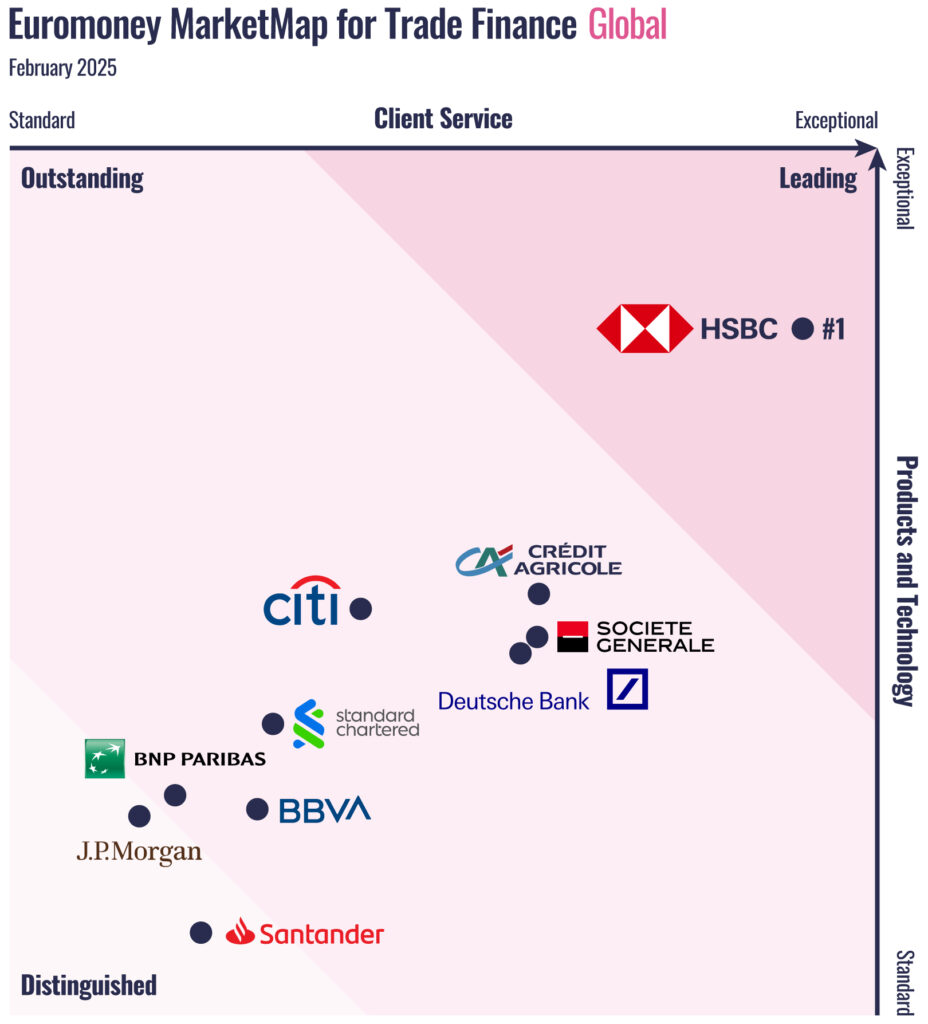
With a global network covering 90% of global trade flows and a team of 5,000 trade specialists across 50+ markets, HSBC provides unmatched support to businesses navigating an evolving trade landscape. The bank has been yet again ranked #1 globally by participants in the Euromoney Trade Finance Survey.
Its worldwide expertise helps clients identify alternative sourcing markets, diversify supply chains and mitigate risks, while offering a comprehensive suite of trade finance solutions to optimise working capital, enhance risk management and ensure seamless transactions. “Trade is in the DNA of the bank. We’re one of the few institutions that run trade as an end-to-end product organisation,” remarks Vivek Ramachandran, HSBC’s head of global trade solutions. This intrinsic commitment is reflected in HSBC’s 160-year history in trade finance, fostering deep and enduring relationships with clients worldwide.
In the face of geopolitical tensions, sustainability concerns and evolving trade policies, HSBC’s extensive global network and deep understanding of international trade dynamics position the bank as a strategic partner for businesses navigating these complexities.
Ranked #1 globally by large corporates participating in the study, Deutsche Bank’s (DB) key strengths are its international network, deep-rooted trade finance expertise and seamless integration across the organisation.
Founded to facilitate trade between Germany, Asia and the Middle East, DB has built decades of expertise in navigating trade flows, structuring risk and scaling transactions for global clients. Its ability to collaborate effectively with multilateral agencies, insurers and export credit agencies further enhances its capacity to de-risk transactions and accelerate trade expansion. Atul Jain, global co-head of trade finance and lending at DB, explains that another key differentiator is the bank’s broad geographic reach, its extensive network providing clients with access to global trade corridors, cross-border liquidity and risk mitigation strategies that are essential for multinational corporations. As Jain highlights: “A key differentiator is that we are deeply embedded across developed, emerging and what I refer to as frontier markets: this ability to connect the dots is powerful.”
From an organisational perspective, unlike many competitors, where working capital solutions, documentary trade and project finance operate in silos, DB unifies these services under one umbrella. “Clients have a single point of access”, Jain explains. Its trade finance offering spans letters of credit, guarantees, working capital finance, lending, project finance, export credit agency finance and natural resource finance. As Jain puts it: “It is a solutioning mindset, the ability to work across the corporate and investment bank, our extensive network, and the fact that trade and risk management are part of the bank’s DNA that, in combination, represent our unique superpower.”
Crédit Agricole CIB has built a global network that enables it to support clients with a comprehensive suite of trade finance solutions. The group operates in 46 countries and had a significant presence in more than 30 key markets. Its long-standing leadership in European markets is reinforced by a historical strength across all trade segments, complemented by a sustained presence in Asia and Latin America. Crédit Agricole CIB’s success in trade finance, voted an outstanding provider globally by respondents, is driven by a combination of technological integration, deep expertise and a client-centric approach.
Trade is in the DNA of the bank. We’re one of the few institutions that run trade as an end-to-end product organisation.
Vivek Ramachandran, HSBC
A multi-year investment plan has played a critical role in enhancing the bank’s capabilities. Significant resources have been allocated to modernising back-end infrastructure, improving efficiency and ensuring a seamless, standardised client experience across all trade finance products. Sustainability remains central to the bank’s strategy, with ESG principles embedded in its corporate DNA; the bank reporting in 2024 a double-digit increase in ESG-linked trade finance and expecting this momentum to continue in 2025.
Beyond technology investments, proximity to clients remains a cornerstone of Crédit Agricole CIB’s business model. This approach allows the bank to gain a deeper understanding of clients’ needs and the industries they operate in. This commitment is reflected in a unique structuring model, designed to bring structuring teams closer to origination and coverage teams. As Etienne Bernard, deputy head of ITB (International trade and transaction banking), explains: “Our new business model is unique in the market, bringing structuring teams closer to origination and to coverage teams. We want the teams that build the end-to-end solution to be as close as possible to the client, enabling us to adapt our response to their industry and sector.”
Another outstanding provider is Standard Chartered Bank (SBC), which was recognised by respondents for its international footprint, especially in key corridors, such as Asia-Pacific, Middle East and Africa. For more than 160 years, trade finance has been at the heart of SCB’s business. Sofia Hammoucha, global head of trade and working capital, talks about the bank’s continuous investment in its systems, processes and solution suite, highlighting: “We keep pace with our clients’ expectations, continuously enhance their experience and empower them to grow and expand their business both locally and across borders.”
A key differentiator is that we are deeply embedded across developed, emerging and what I refer to as frontier markets: this ability to connect the dots is powerful.
Atul Jain, Deutsche Bank
An outstanding provider, BBVA’s success in trade finance is driven by a threefold strategic focus – operating as one team, prioritising a client-first approach and embracing a forward-thinking, ambitious mindset. According to Eva Rubio Garcia, head of global transaction banking at BBVA, sector specialisation is a key differentiator, enabling the bank to structure solutions that enhance its clients’ performance and long-term growth strategies.
The bank not only focuses on meeting annual business targets but also ensures that its strategies are built for the next five to 10 years, aligning with evolving industry trends and technological advancements. “Innovation is at the heart of BBVA,” Rubio emphasis. A standout example of this commitment is the bank’s advanced supply chain finance solution, an innovative cloud-based platform designed to simplify supply chain management while integrating sustainability principles. Unlike conventional sustainable supply chain finance models, BBVA’s approach goes beyond operational efficiency, offering real-time tracking of invoices, payments and supplier onboarding, while actively working with buyers and suppliers to manage Scope 3 emissions.
Sustainability is both a core commitment and a business opportunity for BBVA, reflecting the need for corporates and financial institutions to adapt to a rapidly evolving global landscape. BBVA’s approach is highly innovative, offering clients practical and scalable solutions to help them manage their environmental impact while maintaining competitiveness. The bank focuses on what clients can control, providing financial tools and advisory services that empower businesses to make tangible progress in their sustainability strategies. As Francisco Javier Fernández de Trocóniz, head of global trade finance, highlights: “BBVA has one of the most innovative solutions in the market.”
Innovation is at the heart of BBVA.
Eva Rubio Garcia, BBVA
Over the past decade, Santander CIB has continuously expanded and refined its product suite, introducing new, cutting-edge trade finance solutions designed to meet the evolving needs of corporates and adapt to shifting commercial models and industry trends. Mencía Bobo, global head of global transaction banking at Santander CIB, shares some insights into the bank’s success. “We are committed to support our clients wherever they need us by providing knowledgeable sector advisory, constant product innovation, state-of-the art platforms and tailor-made support in strategic situations,” she says. By offering a fully integrated supply chain finance ecosystem, Santander provides seamless support across pre-shipment financing, payables, inventory management, receivables and guarantees. However, its commitment to innovation extends beyond products – it is embedded in client service, capital management, risk distribution and digitalisation. “We channelise all our efforts towards the goal of deeply understanding our clients’ needs and finding the optimal way of meeting them, whether it implies thinking on new kind of structures, developing innovative risk models, making synergies with other Santander businesses or finding an appropriate partner to make a challenging deal happening,” Bobo explains.
JPMorgan Payments is recognised by the participants in the study for its technology capabilities. “JPMorgan Payments combines world-leading technology capabilities with a deep focus on client service excellence,” highlights Natasha Condon, global head of trade sales. Beyond its proprietary technology, JPMorgan expanded its partnership with Oracle to enhance working capital management, enabling clients to optimise payment terms with vendors. “Our first client has just gone live with the supply chain finance (SCF) integration, and after that experience we are very excited about what this solution can do,” she says. “It massively reduces SCF implementation and technology effort, a longstanding pain point for corporates.”
JPMorgan Payments combines world-leading technology capabilities with a deep focus on client service excellence.
Natasha Condon, JPMorgan
Top trade finance providers in Asia-Pacific
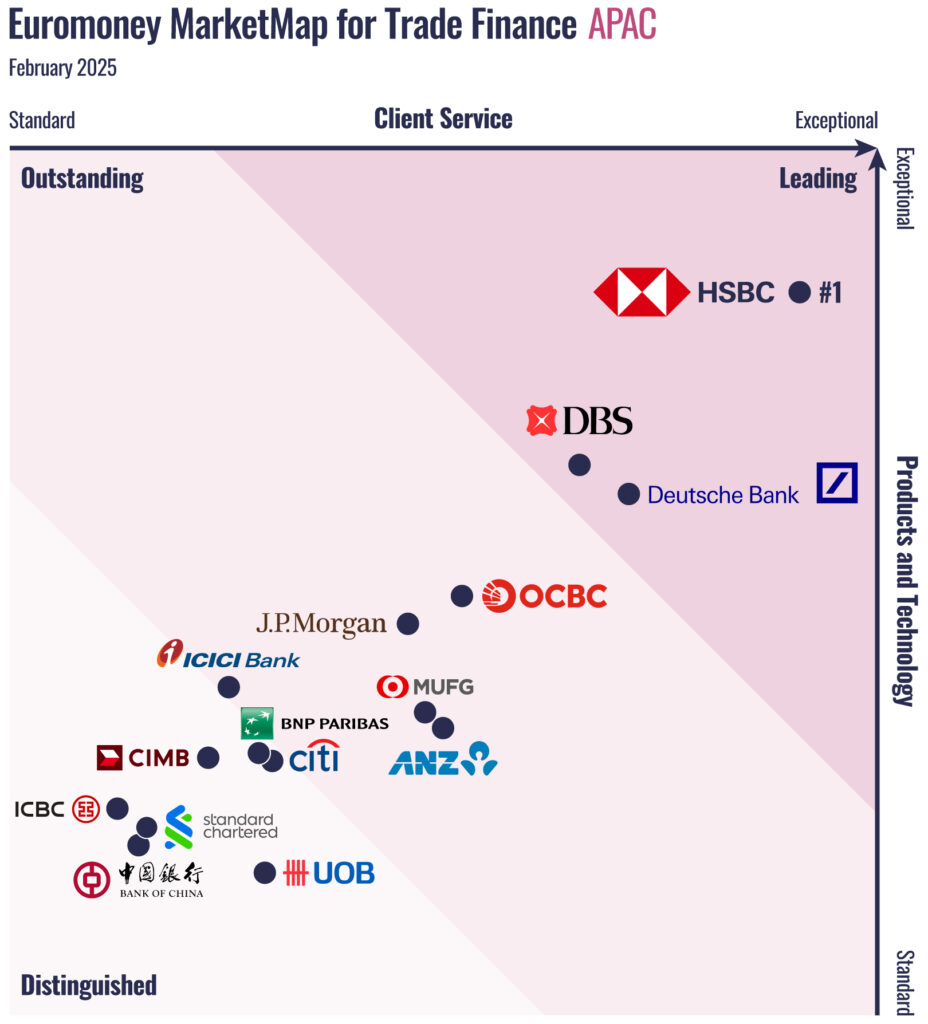
Asia-Pacific has emerged not only as the epicentre of global trade in 2024 but also as a key battleground for trade finance innovation, with banks leveraging technology, deep market expertise and extensive regional networks to strengthen their position. A few of the top banks in this region share insights into their performance and plans for the future.
HSBC was ranked #1 by respondents in Asia-Pacific, reflecting its extensive network, digital innovation and client-centric approach. Aditya Gahlaut, regional head of global trade solutions, Asia, emphasizes HSBC’s role beyond traditional trade finance, describing the bank as “clients’ global connectors, supporting them across their trade corridors; innovative problem solvers, delivering a seamless digital experience supported by best-in-class working capital solutions; and strategic partners, offering insights and advice through times of growth or uncertainty”. With operations in 19 Asia-Pacific markets and a team of 2,500 trade professionals, HSBC facilitates more than 20,000 trade transactions daily.
Asia-Pacific is one of the most developed markets from a digital perspective. 90% of HSBC’s trade transactions in Asia-Pacific are submitted via the HSBC Trade Solutions (HTS) platform, live in 11 markets in the region and serving more than 23,000 customers. “Our customers are able to enjoy the benefits of digitised trade such as straight-through processing and a self-service digital interface,” Gahlaut explains.
Asia-Pacific is one of Deutsche Bank’s (DB) fastest-growing trade finance regions, reflecting the bank’s longstanding presence and deep regional expertise. A leading provider in this market and with operations in 15 countries, DB has established one of the most comprehensive footprints in the region, providing a level of onshore market access that few competitors can match. “We have been in Asia-Pacific for more than 150 years: we know the markets in this region and offer the full power of the corporate and investment bank to our clients in each of them,” Atul Jain, global co-head of trade finance and lending, explains.
Jain gives the example of a large Chinese battery manufacturer, which DB supported to expand in Southeast Asia. As the company enters new markets such as Indonesia, the bank was actively involved in structuring financing solutions, advising on multilateral partnerships and supporting the development of local supplier networks.
In Asia-Pacific, Standard Chartered Bank’s (SCB) technology capabilities stand out, according to the respondents in the study. Sofia Hammoucha, global head of trade and working capital, offers a glimpse into the bank’s strategic roadmap. The bank is planning to include SC PrismFX in its core digital platform. Hammoucha highlights that through this enhancement clients will be able to view applicable pre-booked FX contracts, allowing them to choose how to manage the FX contracts to match their trade transactions. “This integration gives clients flexibility to manage their cross-currency trade transactions with FX capabilities digitally embedded in their journey,” she says. In the future, SCB looks to expand this capability to suppliers of SCB’s clients, which are part of a supplier finance programme. In addition to financing rate, suppliers will be able to take advantage of preferential FX rates of the anchor buyer, being able to self-select the payment currency.
We have been in Asia-Pacific for more than 150 years: we know the markets in this region and offer the full power of the corporate and investment bank to our clients in each of them.
Atul Jain, Deutsche Bank
Top trade finance providers in Middle East

The Middle East is one of the most dynamic regions for trade finance, acting as a global hub that connects markets across continents. As the region pushes for industry diversification and puts sustainability at the centre of its transformation, new opportunities are opening up for businesses and banks alike. Financial institutions are stepping up to help clients navigate these changes, while massive investments in technology are making the region a hotspot for innovation. Some of the top banks in the region share their big wins and bold ambitions for the future.
Mashreq has firmly established itself as a trade finance leader in the Middle East, using digital innovation, global reach and tailored solutions to support businesses of all sizes. Ranked #1 in the Middle East by respondents in the study, the bank continues to push forward with cutting-edge initiatives. “At Mashreq, we have always believed that trade finance is not merely a service – it is the lifeblood of global commerce,” says Ahmed Abdelaal, group CEO of Mashreq.
A cornerstone of Mashreq’s success is its NEO CORP platform, which has transformed trade finance by streamlining operations, integrating real-time analytics and enhancing accessibility. Joel D Van Dusen, Mashreq’s group head of corporate and investment banking, explains: “Our commitment is not just to facilitate trade but to shape the future of commerce with innovation at its core.” Live in Bahrain, Kuwait and Qatar, the platform is set to expand further into Egypt and the UAE by 2025.
Mashreq’s is a perfect example of successfully bridging local market expertise and international network. Beyond the Middle East, the bank has an extensive presence in key financial hubs, including Hong Kong, India, the UK and the US. “As we continue to expand our international presence, we remain focused on fostering deeper relationships, enhancing accessibility, and delivering innovative banking solutions that empower businesses to thrive both locally and globally,” says Tarek El Nahas, group head of international banking at Mashreq.
As a leading trade finance player in the Middle East, HSBC clients recognise the bank’s ability to support them in navigating shifting trade dynamics by offering expert insights into alternative sourcing markets. This allows them to diversify supply chains, tackle sourcing challenges and stay ahead in an evolving global landscape. Beyond its wide-ranging trade finance solutions, the bank focuses on helping businesses optimise working capital, manage risks and simplify transactions – all critical in boosting efficiency and resilience. What truly makes HSBC stand out is its ability to cut through complexity, making trade finance smoother and more accessible for its clients. Vivek Ramachandran, head of global trade solutions business at HSBC, highlights: “By leveraging our global network, digital platforms and tailored financial solutions, businesses can not only manage any challenges but also uncover new opportunities for growth and expansion.”
Abu Dhabi Commercial Bank (ADCB) was ranked #1 by the respondents in United Arab Emirates. ADCB is positioned as a reliable and innovative trade finance partner due to their client-first approach, cutting-edge technology and comprehensive product suite. From open trade accounts and documentary collections to letters of credit, guarantees, receivables finance and supply chain finance, the bank provides businesses with the tools they need to navigate global trade with confidence and efficiency.
As the Middle East markets are focusing on industry sector diversification, supply chain finance plays a key role in growth of various industries, such as hospitality, tourism, and leisure. SMEs are essential for the UAE’s economy and supply chain finance makes it easier for them to access financing, allowing them to engage more fully in global trade. Digital platforms, such as ADCB’s one, enable SME businesses to transact more efficiently, by simplifying processes, eliminating some of the manual tasks, and streamlining overall transaction times.
At Mashreq, we have always believed that trade finance is not merely a service – it is the lifeblood of global commerce.
Ahmed Abdelaal, Mashreqbank
Top trade finance providers in Western Europe
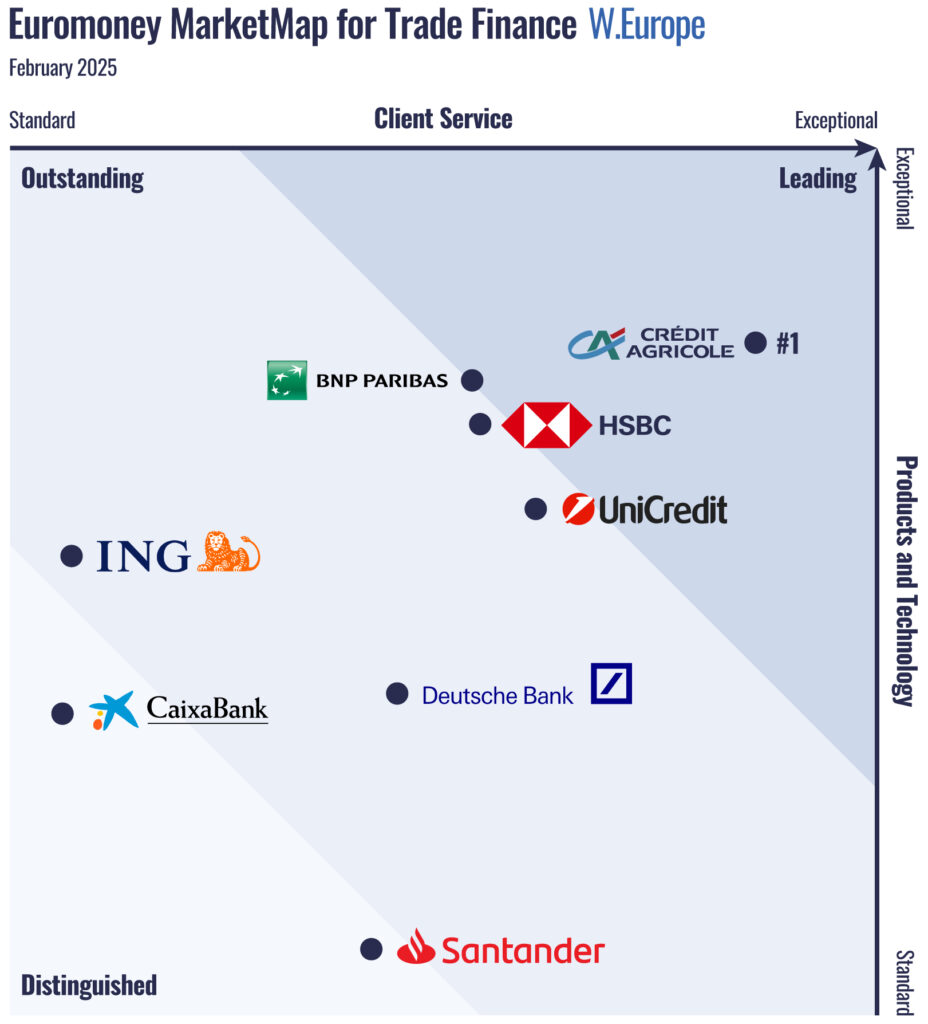
Western Europe remains one of the most competitive trade finance markets globally, where global, regional and local banks compete to deliver a diverse range of products and services. Banks operating in the region face a unique challenge – maintaining strong, long-standing client relationships while expanding into new sectors and reaching new segments of the market. The leading banks in the market are not only adapting to shifting client demands but also shaping the future of trade finance through innovation, strategic expansion and digital transformation. Some of the top players share their insights on how they are staying ahead in Western Europe.
Crédit Agricole CIB was ranked #1 in Western Europe by respondents of the survey. The bank’s position is underpinned by a combination of long-standing client relationships and an expanding presence in new market segments. As sectors such as technology, media, telecommunications (TMT) and infrastructure continue to evolve, the bank has positioned itself as a key partner for these emerging players. A tailor-made approach to client solutions remains a defining characteristic of Crédit Agricole CIB’s strategy. The bank is widely recognised for its ability to understand client needs and develop bespoke financing structures that align with specific business models.
Leveraging its extensive retail banking network in France and Italy, Crédit Agricole CIB has enhanced its corporate banking capabilities. The ability to integrate corporate and retail banking technology allows the bank to offer a seamless, customer-centric experience. As Etienne Bernard, deputy head of ITB (International trade and transaction banking), explains: “We have an extensive network and strong technology capabilities. Working with the retail bank arm allows us to leverage common technology to deliver a retail experience to our corporate clients.”
Trade finance remains a core pillar of Crédit Agricole CIB’s multi-year strategic investment plan, according to Bernard, who says: “Trade remains a strong focus of our strategic roadmap. We have already reinforced our distribution, expanded our service capabilities and re-engineered the way we manage risk.”
We have an extensive network and strong technology capabilities. Working with the retail bank arm allows us to leverage common technology to deliver a retail experience to our corporate clients.
Etienne Bernard, Crédit Agricole CIB
With a distinctive service offering across Italy, Germany and Central and Eastern Europe, UniCredit’s mission is to empower communities and unlock potential. “We serve over 15 million customers worldwide. They are at the heart of what we do in all our markets, aligned with our mission to be the bank-of-choice for corporates and financial institutions in all their trade-related needs,” highlights Francesca Nenci, head of group trade and corresponding banking at UniCredit. Nenci explains that by leveraging its global expertise and deep local market understanding, UniCredit maintains a unique position, being “more global than our local competitors and more local than our international peers”.
Despite a challenging macroeconomic environment, UniCredit remains committed to supporting corporates and their treasuries, adopting a framework called “integrated risk approach”, which holistically assesses economic, financial, political and geopolitical risks. “Our analysis has become more sophisticated, and we evaluate the overall compliance, legal, geopolitical, political and macroeconomic factors, whether aiding a client’s business expansion or advising caution due to risks. It’s the only way to deliver best-in class service for our clients and communities,” Nenci explains.
With strategic support for corporates, innovative partnerships, embedded finance solutions and cutting-edge digitalisation, Santander CIB is highly acclaimed by respondents in Western Europe. As part of the trade finance digitalisation strategy, Santander collaborated with SAP to improve client-to-bank connectivity. This initiative has successfully integrated supply chain finance and receivables platforms into clients’ ERP systems. “The solution makes invisible banking a reality for our clients,” explains Mencía Bobo, global head of global transaction banking at Santander CIB.
We serve over 15 million customers worldwide. They are at the heart of what we do in all our markets, aligned with our mission to be the bank-of-choice for corporates and financial institutions in all their trade-related needs.
Francesca Nenci, UniCredit
Top trade finance providers in Central and Eastern Europe
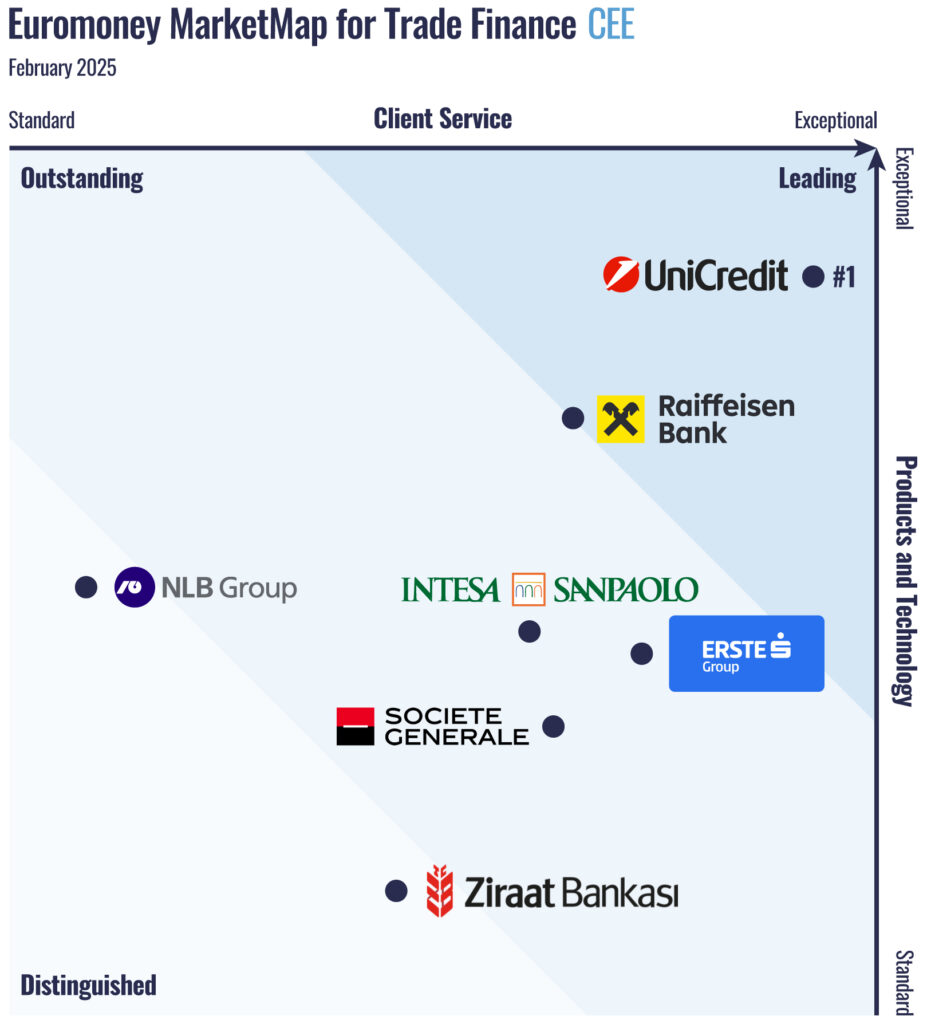
Central and Eastern Europe is one of the most complex regions for trade finance, shaped by a mix of geopolitical tensions, diverse markets and cultural differences. It’s not just about navigating disruptions – it’s about understanding the local landscape, while giving businesses access to global opportunities. Success in this region does not rely only on having the right products but offering deep local expertise. In this section, two leading banks share their approach to the region.
There is no secret that Central and Eastern Europe is one of the most complex regions in the world from a trade finance perspective. Beyond the disruption in the region due to geopolitical tensions, the composition of the market and the cultural aspect play a role in the driving up the complexity. Specialisation is key, since success in this market means a deeply local knowledge, while also providing access to international markets. Two of the leading banks share their insights.
UniCredit continues to drive digital innovation in trade finance across Central and Eastern Europe, enhancing efficiency, transparency and automation in key markets. The bank was ranked #1 in the region by the participants in the study, but their commitment to providing best-in-class products, technology and client service continue.
In Bulgaria, UniCredit Bulbank’s online virtual ecosystem has rapidly gained traction among corporate clients. According to Francesca Nenci, head of group trade and corresponding banking, the bank’s trade finance module, which allows clients to manage the full trade finance cycle and communicate directly with UniCredit’s advisory team, has seen a surge in adoption, with more than 85% of transactions now handled digitally. Meanwhile, in Hungary, UniCredit launched a fully automated end-to-end process for factoring and receivables financing. “We developed a fully digital front-end which allows our clients to deliver electronically the required documentation offering real time tracking, document management and streamlined communication with UniCredit’s trade finance specialists, making the entire process more transparent and efficient for clients,” explains Nenci. In Romania, UniCredit has embraced robotic process automation (RPA) to automatically generate and email business reports, a move that is streamlining client communications and optimising workflows. The bank has also expanded its BusinessNet trade finance module, onboarding more corporate clients onto the digital channel for seamless trade finance applications.
As Nenci puts it: “UniCredit has a fundamental purpose: empower communities to progress. It’s our imperative, even more in today’s geopolitical landscape, to support our clients with digital, simplified and innovative trade finance solutions.”
We developed a fully digital front-end which allows our clients to deliver electronically the required documentation offering real time tracking, document management and streamlined communication with UniCredit’s trade finance specialists, making the entire process more transparent and efficient for clients.
Francesca Nenci, UniCredit
Another core innovator on the market is Raiffeisen Bank International (RBI). Its trade finance solutions are at the core of the bank’s offering, being often recognised by its clients for speed of transactions, response time and access to international markets. “We have a strong global network of over 2,000 RMA connections, enabling us to issue trade finance instruments worldwide”, explains Sabine Koszteczky, head of trade finance at RBI. Reciprocal mutual agreement (RMA) allows banks such as RBI to extend their own international network, by establishing connections with other financial institutions for exchange of SWIFT messages. Offering both a proprietary front-end solution, while also connecting with all major multi-banking channels, RBI is investing in digitalisation, ensuring a superior experience for their customers. The bank recently onboarded Trakk from Komgo, with Koszteczky highlighting: “The solution enables our customers and partners to verify online RBI guarantees to prevent cyber-fraud.”
Experimenting with artificial intelligence (AI) is the next stop for RBI. “We aim to leverage AI solutions, to substantially decrease the processing time of our trade finance transactions,” explains Koszteczky. RBI is planning to launch in Q1-2025 the first trade finance AI use case, allowing automatic screening of incoming Swift messages to verify compliance-related: these include shipment routes, harmonised system codes or information about country of origin.
Top trade finance providers in Latin America

When corporates and banks think about Latin America, economic volatility and regulatory complexity are often among the biggest challenges cited. However, rising inflation and geopolitical instability have brought supply chain resilience to the forefront of client concerns. Companies are increasingly shifting from a just-in-time to a just-in-case inventory model, prioritising supply security over cost efficiency. This shift offers opportunities in Latin America, with Mexico being one of the markets benefiting from the shift. However, the landscape remains fluid, with ongoing tariff discussions set to impact global trade flows once again. Against this backdrop, three of the top banks in Latin America share their insights on the region.
“Trade finance solutions have had to evolve, as supply chain disruptions drive demand for more structured payment mechanisms,” highlights Francisco Javier Fernández de Trocóniz, head of global trade finance at BBVA.
In response to these structural shifts, BBVA is continuously innovating across its product portfolio and ensures that the workforce have the skills required to offer the best-in-class client service. “BBVA is focused on developing solutions that align with the evolving client needs,” says Eva Rubio Garcia, head of global transaction banking at BBVA.
Scotiabank’s trade finance solutions continue to earn high client satisfaction, driven by a commitment to tailored service, innovation and extensive network across the Americas. “We focus on delivering tailored solutions that meet the unique needs of each client, ensuring that their specific challenges are addressed,” notes Dyanne Carenza, vice-president, global trade finance and working capital.
Trade finance solutions have had to evolve, as supply chain disruptions drive demand for more structured payment mechanisms
Francisco Javier Fernández de Trocóniz, BBVA
Furthermore, global reach with local insights is one of the key differentiators for Scotiabank, according to Carenza. Clients are benefiting from dedicated trade specialists in each market the bank operates in, while processing centres in Canada, Chile, Mexico, Peru, and the US provide support. From a front-end perspective, Scotiabank also simplifies trade finance operations via its digital platform – TRADEXPRESS elite Plus, which was recently upgraded to ensure a seamless experience for its users.
“We continue to focus on expanding and integrating our trade and working capital solutions, and enhancing our digital platform, to provide a holistic solution to clients across Americas,” explains Carenza. Scotia Store in Chile is a prime example of innovation, offering both SME and wholesale clients instant product activation and simplified contracting.
Tailoring solutions, creating synergistic solutions that enhance risk management, distribution capacity and cross-business collaboration are key differentiators for Santander. Santander is continuously enhancing its product capabilities, with cutting-edge solutions. For example, through Invensa, a joint venture with Pemberton, Santander offers a unique inventory finance proposition, combining a strong execution team, competitive pricing and enhanced risk management.
Additionally, Santander has launched a buy now, pay later (BNPL) solution, an automated end-to-end platform that allows buyers to access deferred payment options at checkout. Mencía Bobo, global head of global transaction banking at Santander CIB, highlights: “Innovation is part of our DNA, so we already have new solutions in mind or under development. The world is evolving as we speak, and so are our clients’ needs. We aim to keep being at the forefront of the industry and the best choice for our clients.”
Looking forward

If there’s one certainty about trade finance in 2025, it’s that disruption isn’t slowing down. Tariffs, geopolitical shifts and supply chain challenges continue to reshape global trade, pushing banks to play an even more critical role in helping businesses adapt, find alternatives and keep goods moving. But disruption also brings opportunity.
While digitalisation has come a long way, trade finance is still lagging other areas of transaction banking. The industry is continuing its transformation journey, with banks and corporates working together to streamline processes, automate workflows and make trade finance as seamless as the rest of modern banking. The main opportunity is for actors in the industry – regulators, banks, insurers, corporates – to come together and co-create solutions.
Any conversation about the future includes sustainability. As businesses integrate ESG goals into their operations, beyond offering incentives to corporates for their green initiatives, banks play an important role in pushing for standardisation across definitions, frameworks and reporting requirements.
Embedded finance is also set to take centre stage, powered by trade digitalisation and enabling a seamless, interconnected ecosystem where data flows securely and efficiently across all stakeholders.
As economies look to diversify and expand, SMEs take centre stage. Banks are increasingly recognising the need for tailored trade finance solutions for this segment, ensuring that smaller businesses have the same access to global opportunities as their larger counterparts.
Excellence in trade finance in 2025 is defined by collaboration, flexibility and innovation.